September 1, 2026
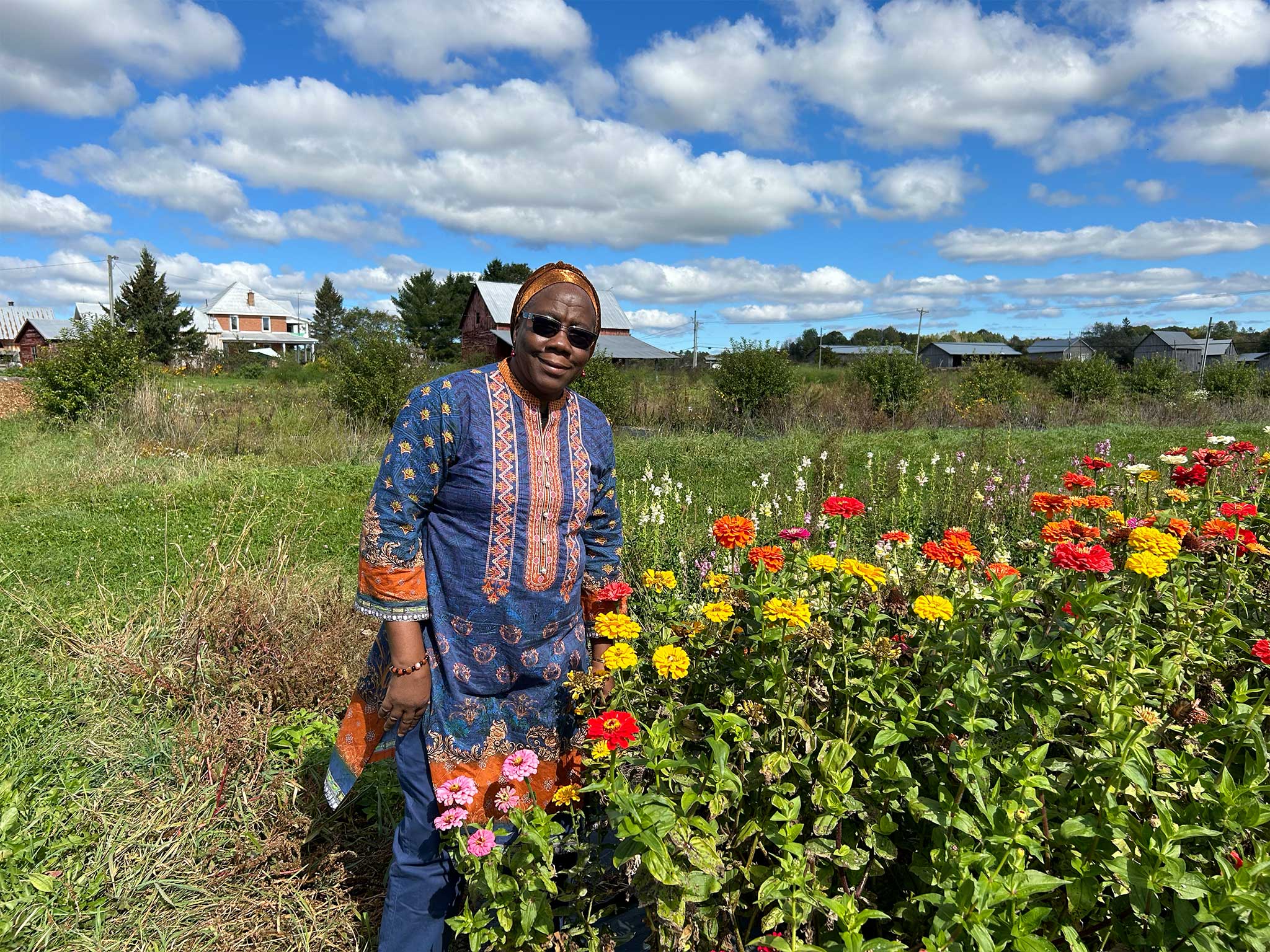
Mariamé Ouattara
Photo: Eric Chaurette/Inter Pares
Mariamé Ouattara has worked across West Africa to advance gender equality and women farmers’ rights for most of her life.
Based in Burkina Faso, she’s collaborated with Inter Pares and our counterparts for more than 20 years to strengthen women’s leadership in agroecology and food sovereignty.
We spoke with Mariamé about what makes our approach to agroecology—farming that works with nature to produce food sustainably—feminist.

At a time when climate change, shrinking international assistance and growing inequality are placing enormous pressure on communities—your gift today strengthens food sovereignty, advances women’s leadership and builds lasting, locally led solutions.

We work in countries that are deeply agricultural and vulnerable to climate change. Women are at the center of both of these realities. Unfortunately, their role is often limited to that of laborers.
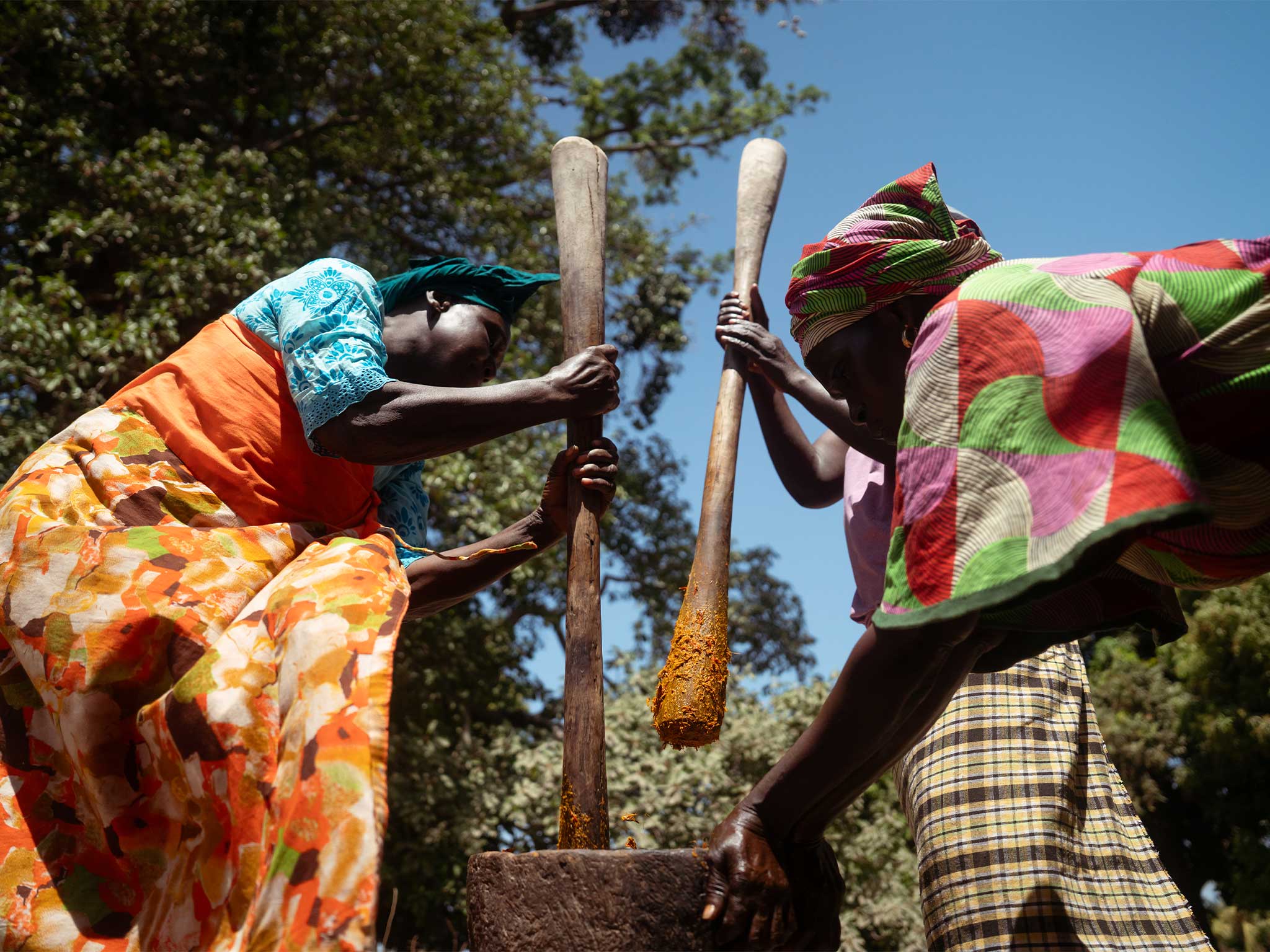
And yet, throughout the entire agroecological chain, women have technical expertise that is largely unrecognized, undervalued and even overlooked. When it comes to seeds, everyone recognizes that women are the best at preserving them, selecting them and knowing how to use them. They also know how to preserve harvests, process food and ensure food security.
That’s why I say women aren’t simply participants. They are holders of knowledge, skills and the ability to shape what comes next.
The challenge is making sure this expertise is valued. Communities have long recognized the place and role of women, but without giving them the power to make decisions.
There are still significant inequalities between women and men when it comes to access to land, technology, financing and the roles each is expected to play. Until we reduce those inequalities, we won’t move forward.
Women aren’t simply participants. They are holders of knowledge, skills and the ability to shape what comes next.
Taking a feminist approach to agroecology means creating the conditions within the community so that women can act as free agents, on an equal footing with men, at every stage of agroecology and climate action.
This means paying attention to the context and realities of both women and men. As long as we fail to address these power dynamics in agroecology, the agroecological transition will fail.
The first change I’ve noticed is the strong sense of self-confidence that has grown among women. Many were asking themselves, “Am I really a citizen? Am I capable?”
Through training on leadership, gender equality, feminist approaches and advocacy, many were able to overcome that self-doubt and take it upon themselves to act.
They now understand that they have rights. They’ve had the courage to ask landowners or traditional authorities for land so they can grow what they want to grow themselves. They participate in decision-making bodies within their communities.
[Women] now understand that they have rights.
Some have been able to obtain an ID card. To access credit, obtain land, or participate in certain decision-making bodies, you have to be legally recognized. Today, they are proud to exist as citizens in their own right.
But there are also changes that aren’t easily measured. One woman told me, “I communicate better with my husband.” Now she discusses her work at the cooperative and her plans with her husband. She feels valued in her relationship which allows her to become more involved in the community.
That is where sustainable social transformation begins.
The feminist approach is not a battle against men. In our contexts, patriarchy grants men many privileges, but they, too, have been socialized within this system. If we want to dismantle these unequal power dynamics, we must involve them.
We’ve developed an approach centered on “feminist champions”: men who use their influence to support women and raise awareness among other men. They stand by women when they seek to obtain land or engage with authorities. This completely changes how their efforts are perceived.
The goal is to create more balanced relationships between women and men, so they can farm together, manage together, communicate and complement one another.
We’ve also worked on sharing household responsibilities. Some men are starting to fetch water or firewood, or encouraging their sons to help their mothers and sisters. That’s an important step for us. We’re educating the men of tomorrow.
Little by little, this frees up time for women. They can participate more in cooperatives, training, decision-making spaces and economic activities. The more men understand what’s at stake, the better it is for everyone. The whole community benefits.
The goal is to create more balanced relationships between women and men, so they can farm together, manage together, communicate and complement one another.
It’s an approach that empowers local partners while respecting sociocultural norms and sociological frameworks.
From the very beginning, the projects were developed based on the realities in each country. We were asked to define the context, the relationships between women and men, the levers for change and the barriers that needed to be overcome. The actions were then built around those realities.
When we talk about gender equality or feminism, we’re touching on sociocultural foundations. The key is not to ignore these foundations, but to understand how to build on them to drive change. Our counterparts take initiatives tailored to their specific contexts and empower communities by asking them, “How do you envision change?”
We cannot simply copy and paste a model from one country to another. We must start from the realities on the ground.
Many people thought the feminist approach came from abroad. Our counterparts have succeeded in translating it into national languages and grounding it in local realities, and communities have come to understand that it speaks to their own lives. That explains the sense of ownership I’ve observed.
That’s what gives me the most hope for the future.
Strengthen food sovereignty, advance women’s leadership and build lasting, locally led solutions.
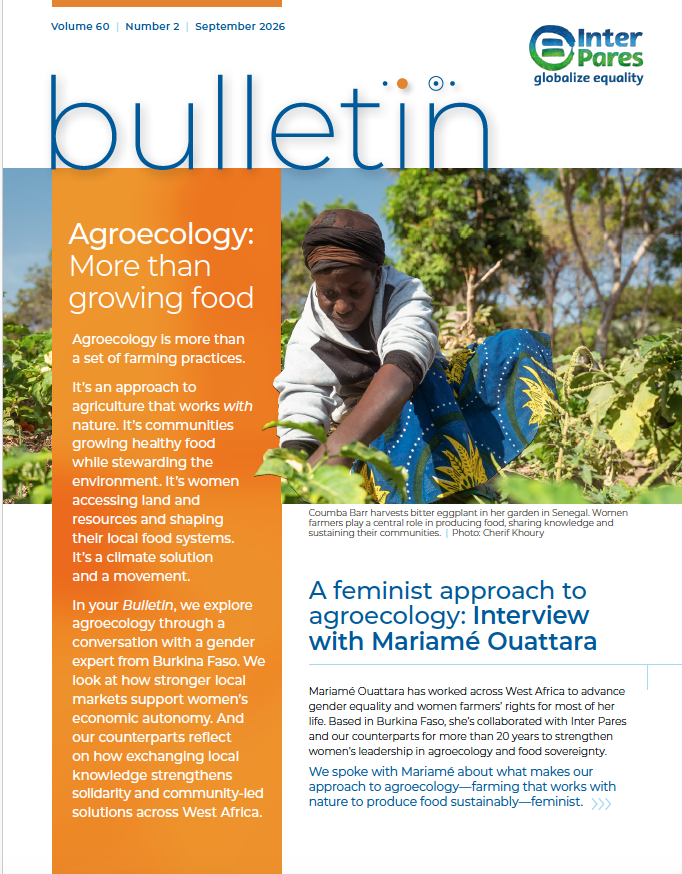
In your Bulletin, we explore how agroecology is more than a set of farming practices.
Inter Pares acknowledges Global Affairs Canada for its financial support for this project.