Seventeen civil society organizations—including Inter Pares—and 47 individuals submitted an open letter to the Government of Canada this week, as part of Canada’s public consultation on a potential free trade agreement with the United Arab Emirates.
For months, human rights advocates have consistently raised opposition to Canada’s rapidly deepening ties to the U.A.E.
In the letter, we express serious concerns about a Canada-U.A.E trade agreement due to the U.A.E’s involvement in fomenting and perpetuating the war in Sudan. Ample evidence has shown the U.A.E. to be the primary sponsor of the paramilitary Rapid Support Forces (RSF), which stands accused of war crimes and genocide. As a precondition to entering into any free trade agreement with the Emiratis, we strongly urge the Canadian government to insist upon the U.A.E.’s complete withdrawal of all material and diplomatic support to the RSF.
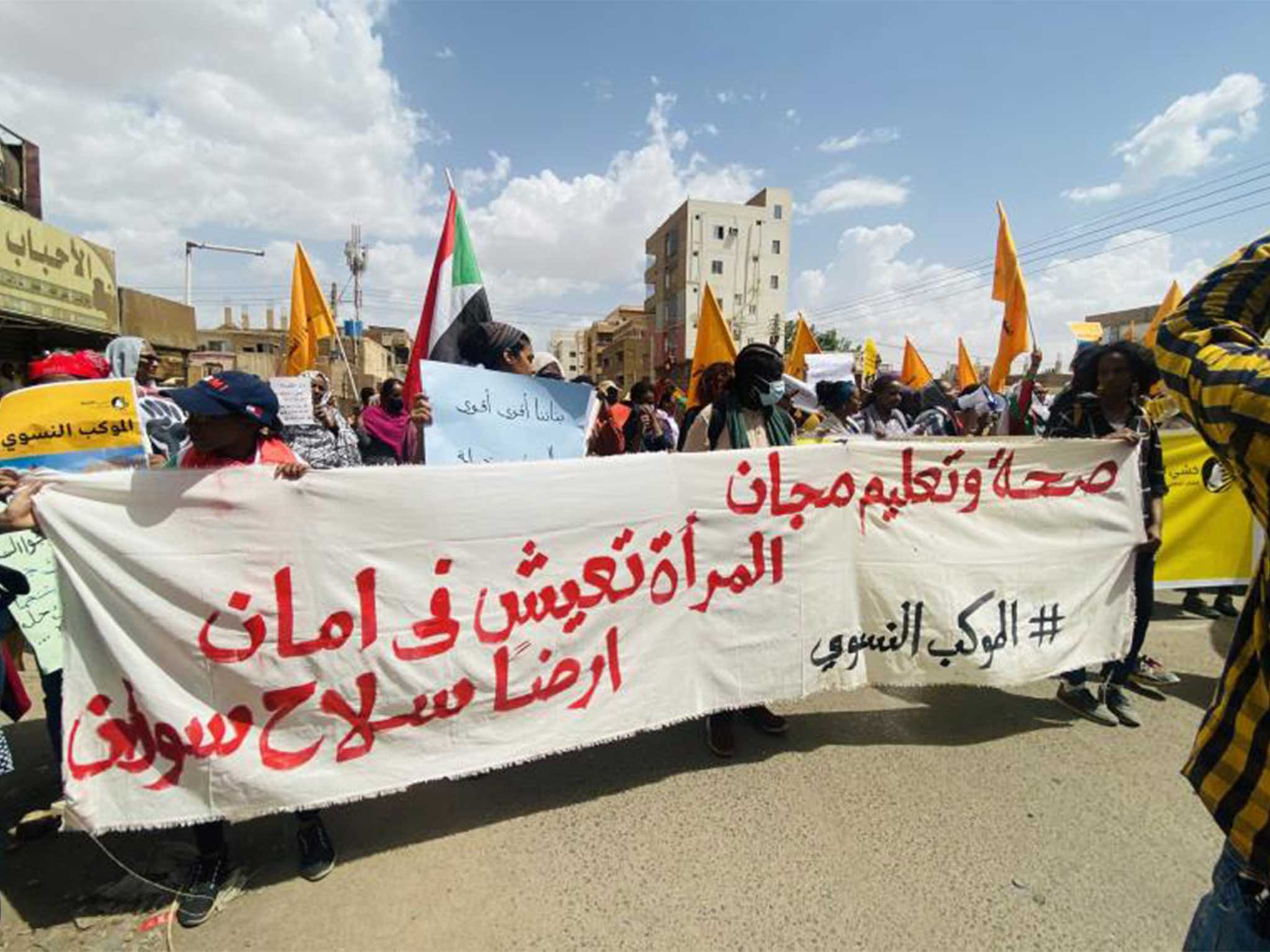
Since war began in Sudan in April 2023 between the Sudanese Armed Forces (SAF) and the RSF, 11.8 million civilians have been forcibly displaced. Infrastructure and public services have been destroyed. It is currently the largest hunger and displacement crisis in the world.
The letter was organized by the Canadian Civil Society Working Group on Sudan, of which Inter Pares is co-chair. The working group was formed in 2024 to act as a forum for solidarity, exchange and action.
Read the open letter, below or download the PDF.
Canada-UAE Trade Consultations
Global Affairs Canada
Trade Negotiations Division
111 Sussex Drive
Ottawa, ON
K1N 1J1
Email: TCE-Consultations@international.gc.ca
January 27, 2026
To Whom It May Concern
We would like to express our deep concerns about Canada establishing a free trade agreement with the United Arab Emirates as a result of that country’s involvement in fomenting and perpetuating the war in Sudan.
The situation in Sudan is profoundly disturbing. Since the war began in April 2023, 11.8 million people have been forcibly displaced, including 7.1 million internally displaced and 4.4 million who have fled to neighbouring countries. The country has suffered debilitating losses of infrastructure and critical public services in the healthcare, banking, communications, education and cultural sectors. It is currently the largest hunger and displacement crisis in the world. More than 21 million people face acute hunger. Famine has been declared in North Darfur and South Kordofan regions, with other regions at varying levels of risk.
The International Fact-Finding Mission for the Sudan as well as numerous civil society organizations have documented the horrific scale of human rights abuses that continue to occur in Sudan – among them, extrajudicial killings, sexual violence, kidnapping, looting of personal property, destruction of critical infrastructure, and targeting of healthcare facilities. There has been mounting evidence of war crimes being committed by combatants. The paramilitary Rapid Support Forces (RSF) stands accused of genocide and war crimes. In October 2025, the RSF’s massacre of civilians in El Fasher, Darfur was documented through satellite imagery and video evidence. Currently, the Kordofan region is experiencing a similar situation. Mass atrocities committed by the RSF throughout the war have also been verified by first-hand testimonies.
From early on, the intervention of outside actors has fueled this war. There is ample evidence, reported in the mainstream press, that the U.A.E. is the primary sponsor of the RSF. As summarized by the Globe and Mail recently, “There are widespread reports – including some based on satellite images, flight tracking data, seized passports and other evidence – that the U.A.E. is the main supplier of weapons and other military equipment to the RSF, including drones and armoured vehicles.” The scale of the U.A.E.’s support renders them not just complicit in, but responsible for, the human rights violations and war crimes being committed.
As a precondition to entering into any free trade agreement with the Emiratis, we strongly urge the Canadian government to insist upon the U.A.E.’s complete withdrawal of any material or diplomatic support to the RSF.
Canada has signed several joint statements expressing alarm at the systemic violence in Sudan and calling on parties to implement a ceasefire. Minister Anand has echoed these publicly. Especially in this global moment, even as Canada looks to diversify its trading partners, we insist that it needs to assert its support for human rights as a core Canadian value. Our prosperity cannot be built at the expense of the lives and futures of the Sudanese people.
Sincerely,
Organizations
Above Ground, a project of MakeWay
Amnistie internationale Canada francophone
Canadian Centre for Policy Alternatives
Canadian Union of Public Employees | Syndicat canadien de la fonction publique
Development and Peace – Caritas Canada
Ending Sexual Violence Association of Canada
Equality Fund
Inter Pares
John Humphrey Centre for Peace and Human Rights
Ontario Council of Agencies Serving Immigrants
Public Service Alliance of Canada – Alliance de la Fonction publique du Canada
Sudanese Women Rights Action
The Sudanese Canadian Association of Waterloo Region and Wellington County
Trade Justice Network
WILPF Canada
Women’s Centre for Social Justice (WomenatthecentrE)
Women’s National Housing & Homelessness Network
Individuals
Adetoun Ilumoka, Panafstrag
Aina-Nia Ayo’dele
Alex Neve, O.C., Senior Fellow, Graduate School of Public and International Affairs, University of Ottawa
Amanda Dale
Amanda Wilson, Professor, Saint Paul University
Ann Homan, VOW Canada
Anne Lagacé Dowson, Independent Journalist
Audrey Macklin, Faculty of Law, University of Toronto
Beth Woroniuk, Former Chair, Women, Peace and Security Network – Canada
Bruna Nota
Chantal Pelletier, Mère au front de l’Outaouais
Charlotte Akin, Disarmament Advocate, Master of Arts
Diane Brown
Doris Buss, Professor of Law and Legal Studies, Carleton University
Douglas Proudfoot, Former Director, Sudan Task Force
Elaine Gibson, Professor Emeritus, Dalhousie Law Faculty
Fahima Hashim, Women Rights Defender
Fannie Lafontaine, Full Professor, Université Laval
Frewengel Woldemichael
Geneviève Carrisse
Heather McLeod-Kilmurray, Professor, CELGS, University of Ottawa, Faculty of Law
Jamie Liew, Professor, University of Ottawa
Jane Bailey, Full Professor, Faculty of Law, University of Ottawa
John Packer, Associate Professor of Law, University of Ottawa
Laura Macdonald, Chancellor’s Professor, Carleton University
Laura Solbert, Executive Director, Kentro Christian Network
Lee Holland
Luin Goldring, Professor, Sociology, York University
Margaret McLennon
Mark Kersten, Professor, University of the Fraser Valley
Martha Jackman, Professor Emerita, Faculty of Law, University of Ottawa
Melissa, Marschke, Professor, University of Ottawa
Michael Byers, Professor of Global Politics and International Law, The University of British Columbia
Moira Rehmer
Mona Paré, University of Ottawa
Monique Cuillerier, Consultant
Nahid Azad, Professor of Medicine
Nolwenn Le Diuzet
Pablo Idahosa, Professor Emeritus, York University
Paul Champ, Lawyer
Penelope Simons, Professor, Faculty of Law; Director, Human Rights Research and Education Centre, University of Ottawa
Sarah Berger Richardson, Associate Professor, Faculty of Law, University of Ottawa
Susan B. Boyd, Professor Emerita, University of British Columbia
Susan Spronk, Associate Professor, University of Ottawa
Suzanne Bouclin, Professor, Faculty of Law, University of Ottawa
Wally Kapaklili
Xan Dagenais, Human Rights Advocate