The highest human rights court in Latin America ruled that the Peruvian government is responsible for the 1997 death of Celia Ramos. Celia was a young mother who was forced to undergo sterilization. She died soon after from medical complications.
The Inter-American Court of Human Rights (IACHR) issued this decision on March 6, 2026. It confirms what survivors and advocates have said for decades: the Peruvian government violated the human rights of thousands of women through a massive, forced sterilization program in the 1990s.
“We welcomed the decision with deep and reparative joy. The women were deeply emotional upon hearing the news.”
Félix Rojas
“The ruling affirms that these acts were serious human rights violations that are not subject to statutes of limitation or amnesty,” says María Ysabel Cedano García, co-counsel in the Celia Ramos case.
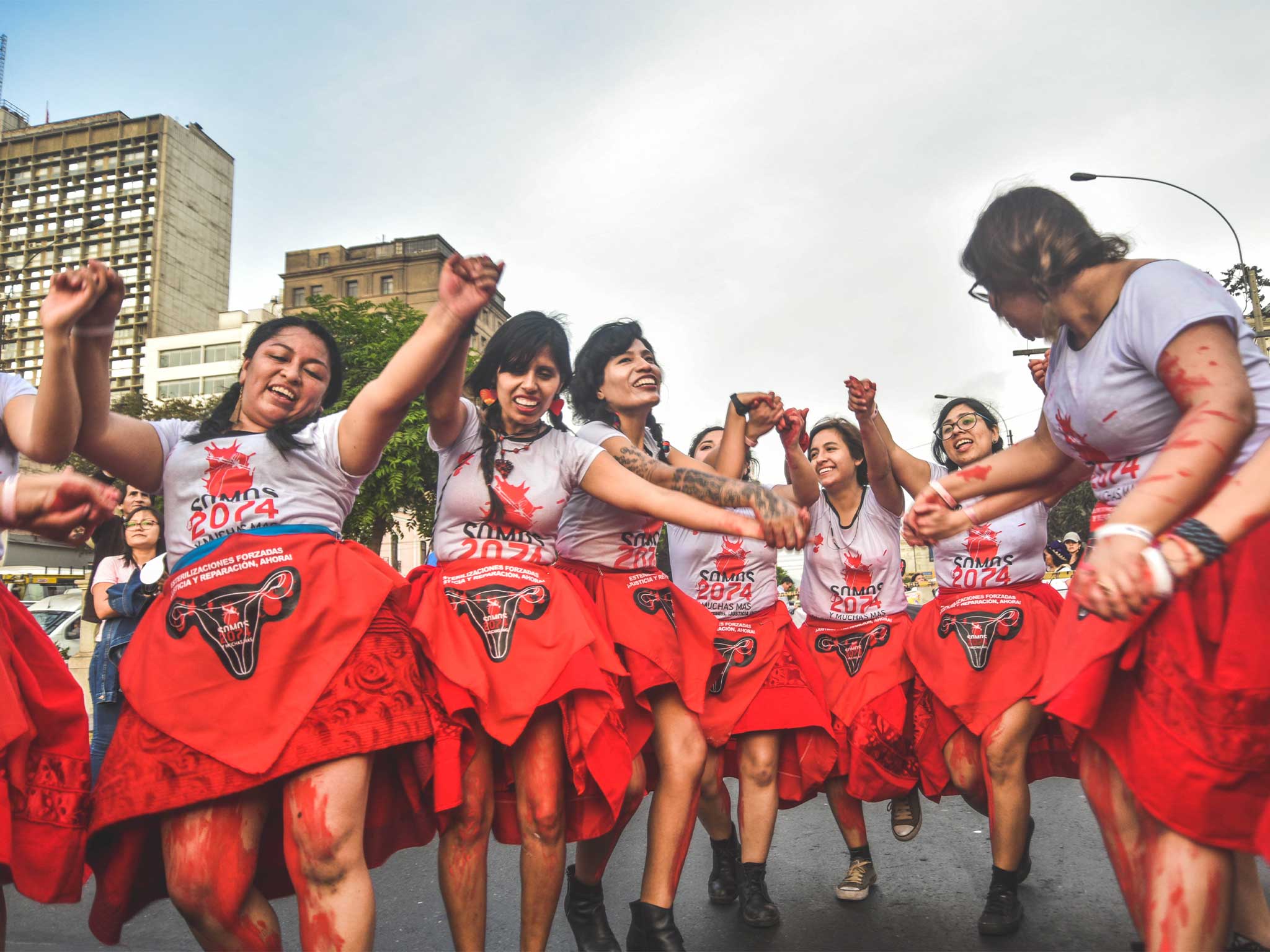
More than 300,000 women were targeted by this program. Most were rural and Indigenous women, many of whom identify as campesinas. For them, the court’s decision brings long-overdue recognition of truth.
“We welcomed the decision with deep and reparative joy. The women were deeply emotional upon hearing the news,” says Félix Rojas, director of Centro de Desarrollo Andino (SISAY), a Peruvian organization that supports survivors of forced sterilization in the Andean highlands.
“They feel as though their pain has been heard. The decision restores the dignity that the state tried to take from them. It is not only an act of justice for the family of Celia Ramos—it is also a historic precedent that shines a light on the path for all victims of reproductive violence in our country.”
A brutal legacy: What happened in the Celia Ramos case?
In 1997, health workers coerced Celia Ramos to undergo sterilization surgery. The procedure took place in a facility that did not have the proper equipment or medicine to handle emergencies. During the surgery, Celia suffered a severe allergic reaction. She died 19 days later.
The court found that the Peruvian state violated Celia’s rights to life, health, safety, information and equality. It also ruled that the state failed to properly investigate her death, leaving her family with unanswered questions for decades.
Celia Ramos’s case is part of a painful legacy tied to the reproductive policies of former Peruvian president Alberto Fujimori. These policies relied on intimidation, deception and fear. They were used to control the bodies of poor, rural and Indigenous women across Peru.
“The judgment represents decades of tireless work,” says Inter Pares program manager, Nasya Razavi. “Organizations we work with in Peru have pursued justice for decades—30 years in Celia Ramos’s case—despite huge obstacles.”
Article continues below.

Become a monthly supporter for justice
Justice takes time. While this ruling is a powerful step forward, survivors in Peru continue to face legal, financial and political barriers.
By becoming a monthly donor, you provide steady support for survivors of forced sterilization in Peru and the organizations working alongside them. Your ongoing gift helps sustain legal advocacy, survivor health care and community‑led organizing—month after month.
Become a monthly donor today.

Inter Pares: Supporting survivors of forced sterilization in Peru
For years, Peruvian women have organized, spoken out and fought for recognition for what they endured.
As a Canada-based social justice organization, Inter Pares has worked in solidarity for decades with two Peruvian organizations, SISAY and Estudio para la Defensa de los Derechos de la Mujer (DEMUS). Together, we support women who survived forced sterilization and continue to seek justice.
SISAY works closely with survivors in the Andean highlands. The organization supports survivors’ advocacy efforts and offers emotional support and livelihood projects that generate funds for health care for complications related to the sterilization procedure.
DEMUS provides legal representation and support to survivors. A feminist organization focused on women’s rights and gender justice, DEMUS first brought Celia Ramos’s case to the IACHR in 2010.
Together—with the support and solidarity of Inter Pares—these organizations keep survivors’ voices at the centre of the fight for justice.
“The rural and Indigenous women DEMUS and SISAY support have suffered in silence due to the stigma around forced sterilizations,” says Nasya from Inter Pares. “The IACHR decision is a positive step toward recognition and reparations.”
“The IACHR decision is a positive step toward recognition and reparations.”
Nasya Razavi
“But women in Peru still face many barriers to justice,” she adds.
A victory for women’s rights and gender justice… but the fight isn’t over
The human rights court’s decision in Celia Ramos’s case marks a major step toward justice.
“By holding the Peruvian state responsible, this courageous judgment presents a break from decades of structural impunity,” says Félix from SISAY.
But much work remains. While families like the Ramoses continue to seek answers, survivors across Peru are fighting for reparations from the state.
“The Peruvian state must … comply with the constitutional ruling that mandates a policy of comprehensive reparations. This policy must be reactivated and expanded to include all other victims who have yet to be recognized,” says María Ysabel, co-counsel in the Celia Ramos case. María Ysabel is a lawyer with DEMUS, whose work is supported by Inter Pares.
“The Peruvian state must … comply with the constitutional ruling that mandates a policy of comprehensive reparations.”
María Ysabel Cedano García
Despite the court’s positive ruling, securing reparations will not be easy. The discrimination and racism that enabled these abuses in the 1990s still exist today. Many of those responsible for the violence continue to justify their actions.
And DEMUS expects resistance from the Peruvian government. Recently, the government made key legal changes that weaken accountability for state crimes and threaten access to justice. One new legal reform prevents organizations like DEMUS from receiving international cooperation funding to pursue legal cases against the Peruvian state. This restriction makes it harder to hold the government accountable.
As a result, survivors of state violence—especially Indigenous people seeking reparations for abuses committed during the Fujimori era—now face even more barriers to justice.
Still, María Ysabel is hopeful. She believes the court’s decision will strengthen the struggles of thousands of survivors of forced sterilization in Peru.
“This ruling affirms the state’s duty to deliver justice and provide full reparations,” she says.
Become a monthly donor today.