
Aaron Vansintjan.
Photo: Food Secure Canada
Canada produces more than enough food to feed everyone in the country.
Still, nearly one in four people live in food-insecure households. Through our work with Food Secure Canada, we support public policy solutions that tackle the root causes of food insecurity. We spoke with policy lead Aaron Vansintjan about why so many people in Canada struggle to afford groceries and what solutions could help.

The most direct cause of food insecurity in Canada is lack of sufficient income. People who do not have enough money can’t afford food, so we advocate for income solutions as the primary solution.
There are also deeper issues: access to land, especially for Indigenous people, and the lack of food sovereignty for certain marginalized groups. Black, Indigenous, and migrant communities experience much higher rates of food insecurity because of structural racism and barriers to practicing their cultural foodways, which includes accessing culturally appropriate food.
The food industry in Canada is highly concentrated. Distribution is one of the biggest issues. In many regions, farmers have only one or two large distributors they can sell through, and they’re often owned by these same food retailers.
I spoke with a farmer in Quebec who couldn’t sell to established grocery retailers because of distribution costs. He now exports his organic vegetables to Kentucky because he finds better prices there.
That concentration exists throughout the food supply chain. It makes it harder for farmers to sell food at affordable prices and harder for people to access Canadian-grown products.

At a time when making ends meet is getting harder every day—your gift today supports locally-led solutions to strengthen economies and build resilient communities.

For housing, education and health care, society has acknowledged that we need non-market alternatives because markets alone don’t guarantee everyone access.
In the food system, we don’t seem to acknowledge that, even though food is a human right.
The idea of public grocery stores is that it’s a supermarket that has some kind of public ownership.
For example, New York City plans to open a city-owned grocery store where the city covers the costs of the building. That will allow some goods to be sold for as much as 30 per cent less. We’re looking at different models for Canada but one thing that’s becoming very clear is that if you want it to work, you do have to subsidize it.
In many remote communities in the North, the federal government already subsidizes private companies who have been found not to pass those on to consumers. In those cases, you might as well have a public grocery store—or a nonprofit or community-owned supermarket—that can guarantee people the right to food rather than making profit the priority.
People recognize that there is a crisis and that the government needs to invest heavily to address it.
Now we need to go further by strengthening income-based solutions and nonprofit alternatives that guarantee everyone the right to food. That’s the next step if we want to protect against further corporate concentration.
Support locally-led solutions to strengthen economies and build resilient communities.
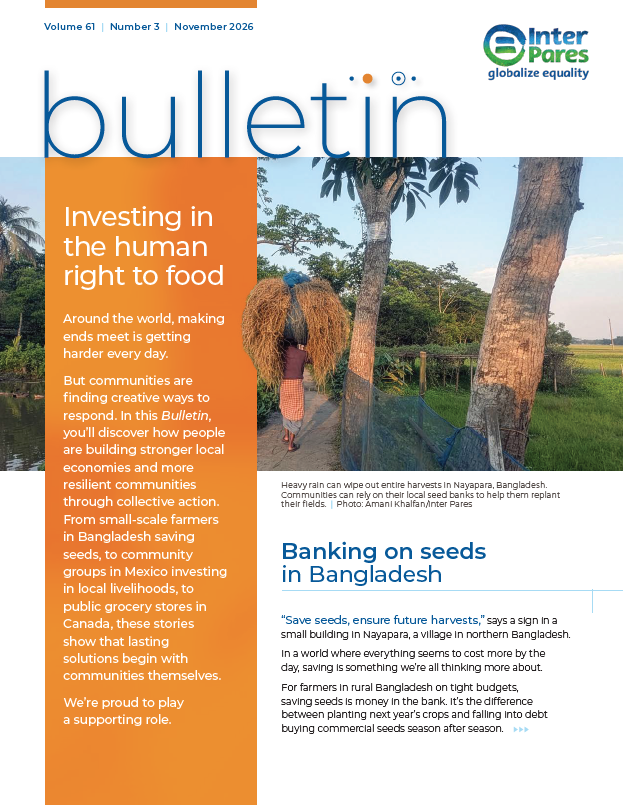
Around the world, making ends meet is getting harder every day. Discover how people are building stronger local economies and more resilient communities through collective action.