

Food begins buried in the land beneath our feet, nourished by water, sun and care.
Farmers plant seeds from one season to the next, carrying knowledge and wisdom from previous generations. They till the soil, harvest the fruit, prepare food for sale or to enjoy with their community.
Around the world, the people and systems that bring our food from field to plate are under growing pressure. Climate change is transforming the places where people farm, fish and gather. At the same time, corporations are gaining greater control over land, seeds and markets. Industrial agriculture is eroding biodiversity, depleting soils of their richness, and increasing farmers’ dependence on costly seeds, fertilizers and pesticides.
Communities that contribute the least to the climate crisis live with some of its most immediate consequences. Across the coastal and island regions of West Africa, rising seas, erosion, saltwater intrusion, droughts, floods and unpredictable rainfall threaten not only ecosystems, but also the food, livelihoods and ways of life they depend on.
In West Africa, women farmers are acutely affected by these challenges—while also confronting social norms that limit their power. They grow and prepare food and manage the natural resources that sustain their families and communities. Yet women often have less access to land and other resources and less say in decisions that shape their environment.
But this is changing. Women farmers are planting seeds for a different future. They are adapting how food is grown, taking space around decision-making tables and shaping the future of their lands and communities. Building resilience therefore means more than adapting how food is grown. It means ensuring women have the resources, tools and space to bring their knowledge to the table and to shape the future of the lands and communities they sustain.
Since 1975, Inter Pares, a Canadian social justice organization, has worked alongside local activists and organizations—like those supporting women farmers in West Africa—to build food systems that are locally-led and sustainable. Our work is rooted in long-term relationships of trust and solidarity with feminist organizations, farmers’ movements and rural women. Their expertise guides us. Where change takes root brings together photographs from Senegal, Guinea-Bissau and Togo to share a piece of their story.
Photo stories: Where Change Takes Root
Making honey, breaking barriers
Food begins buried in the land beneath our feet, nourished by water, sun and care. Farmers plant seeds from one season to the next, carrying knowledge and wisdom from previous generations. They till the soil, harvest the fruit, prepare food for sale or to enjoy with their community.
Around the world, the people and systems that bring our food from field to plate are under growing pressure. Climate change is transforming the places where people farm, fish and gather. At the same time, corporations are gaining greater control over land, seeds and markets. Industrial agriculture is eroding biodiversity, depleting soils of their richness, and increasing farmers’ dependence on costly seeds, fertilizers and pesticides.
Communities that contribute the least to the climate crisis live with some of its most immediate consequences. Across the coastal and island regions of West Africa, rising seas, erosion, saltwater intrusion, droughts, floods and unpredictable rainfall threaten not only ecosystems, but also the food, livelihoods and ways of life they depend on.
In West Africa, women farmers are acutely affected by these challenges—while also confronting social norms that limit their power. They grow and prepare food and manage the natural resources that sustain their families and communities. Yet women often have less access to land and other resources and less say in decisions that shape their environment.
But this is changing. Women farmers are planting seeds for a different future. They are adapting how food is grown, taking space around decision-making tables and shaping the future of their lands and communities. Building resilience therefore means more than adapting how food is grown. It means ensuring women have the resources, tools and space to bring their knowledge to the table and to shape the future of the lands and communities they sustain.
Since 1975, Inter Pares, a Canadian social justice organization, has worked alongside local activists and organizations—like those supporting women farmers in West Africa—to build food systems that are locally-led and sustainable. Our work is rooted in long-term relationships of trust and solidarity with feminist organizations, farmers’ movements and rural women. Their expertise guides us. Where change takes root brings together photographs from Senegal, Guinea-Bissau and Togo to share a piece of their story.
In Casamance, a region in southern Senegal, beekeeping has always been considered men’s work. Harvesting honey involves climbing trees, working at night, handling fire and getting close to thousands of bees. These risks, along with deeply rooted beliefs about what women should and should not do, have often kept women from becoming beekeepers themselves. Instead, women’s roles have largely been limited to processing and selling honey, with fewer opportunities to develop skills or earn income directly from its production.
But this is starting to change.
With training, appropriate equipment and support from Senegalese organizations like Association des apiculteurs du Sénégal (APISEN), women in Senegal are learning every step of beekeeping, from building and maintaining hives to harvesting honey. This creates new opportunities for women to earn an income while contributing to the protection of local ecosystems. Bees play an essential role in pollination and the regeneration of forests, making beekeeping particularly important as communities respond to a changing climate.
In spring 2026, with the support of Inter Pares, women farmers from Guinea-Bissau travelled to Senegal to learn from their peers. There, they met women beekeepers, practiced harvesting honey and explored whether beekeeping could also provide a sustainable source of income in their own communities.
The landscapes and forests the women farmers encountered felt familiar. So did many of the challenges. By building connections across borders and learning from one another, women are creating new possibilities for their communities—and challenging assumptions about who can be a beekeeper.
Agroecology: Working with nature
For generations, farmers have learned to understand the land, adapting what they grow as conditions change. Agroecology draws on farmers’ knowledge to produce food in ways that work with nature rather than against it.
Farmers may grow diverse crops, conserve water, protect local seeds, nourish soils naturally or integrate trees into farmland. These practices avoid the use of harmful and costly chemical fertilizers and pesticides while protecting the biodiversity and natural resources that farming depends on.
As temperatures rise and rainfall becomes less predictable, working with nature also becomes a way of adapting to a changing climate. Healthy soils hold more water. Diverse crops make it more likely that something will thrive when conditions are difficult. Trees protect and regenerate soils, while seeds carefully selected and passed down over generations carry memory of the conditions in which they grow.
Across West Africa, Inter Pares works alongside feminist organizations, farmers’ movements and rural women to strengthen these practices—from saving and exchanging seeds and producing natural fertilizers, to diversifying crops, beekeeping and restoring degraded land. Each community responds to challenges in unique ways, but all are rooted in the same idea: communities can feed their families and earn a living while caring for the ecosystems that sustain them.
Turning water into abundant harvests
Water is the lifeblood of every garden: it nourishes the soil, sustains crops and is an integral part of farmers’ daily lives. But across West Africa, longer dry periods and unpredictable rainfall are making every drop more precious. For women farmers, getting enough water to their crops can also mean hours of physically demanding work—time and energy that could be used in other ways.
Sometimes, adapting to a changing climate starts with something as essential as bringing water closer. Alongside our counterparts, Inter Pares and SUCO support communities to identify and implement solutions that respond to their realities—from building wells to installing solar-powered pumps and irrigation systems. These investments build on solutions already taking shape in farming communities, giving them tools to use water more efficiently, ease the daily work of tending their gardens and make their farms more resilient to a changing climate.
A more resilient future can begin with something as simple and essential as water.
Building livelihoods through sustainable oyster harvests
In West Africa, harvesting oysters has long been an important source of income for women. Traditionally, oysters are collected from the roots of mangrove trees. Harvesting them often means cutting those roots and damaging the very ecosystem that oysters, fish and coastal communities depend on.
As mangroves deteriorate and fish become scarcer, communities are finding ways to protect these ecosystems and local livelihoods.
Women have learned new oyster farming techniques using thousands of strings to provide surfaces for young oysters to grow on without cutting mangrove roots. This technique has helped establish large oyster farms and makes it easier to access the oysters when they are ready to harvest.
The results reach beyond the mangroves. Instead of one harvest a year, women can now harvest oysters two or three times, with larger quantities and better-quality oysters, providing an important source of food and income. They are also learning new ways to prepare and preserve them. Women can now preserve fresh oysters in jars, adding value to their harvest and opening the door to new markets and income opportunities.
Mangroves: Natural barriers to climate change
Along the coast of West Africa, land and water meet in the mangrove. Their tangled roots hold soil in place and soften the force of waves and storms, creating a natural barrier for coastal communities increasingly exposed to the effects of climate change.
Beneath the surface, those same roots shelter an extraordinary array of life. Fish, oysters, shellfish and other species live among them, feeding locals and providing sources of income. Mangroves also capture and store large amounts of carbon.
But the ecosystem is at risk. Rising temperatures, changing rainfall, pollution and the cutting of mangrove trees for firewood are contributing to its decline. As mangroves disappear, so do some of the resources people rely on.
Across the region, communities are working to reverse this loss. Women and young people are collecting seedlings, establishing nurseries and replanting deforested areas. This work is closely connected to livelihoods such as fishing, oyster farming and shellfish harvesting: restoring the mangrove also means restoring the places where these activities can thrive.
A seedling planted today will take years to become part of a mature forest. But root by root, communities are helping the mangrove return—protecting coastlines, making space for biodiversity to regenerate and tending an ecosystem that, in turn, takes care of them.
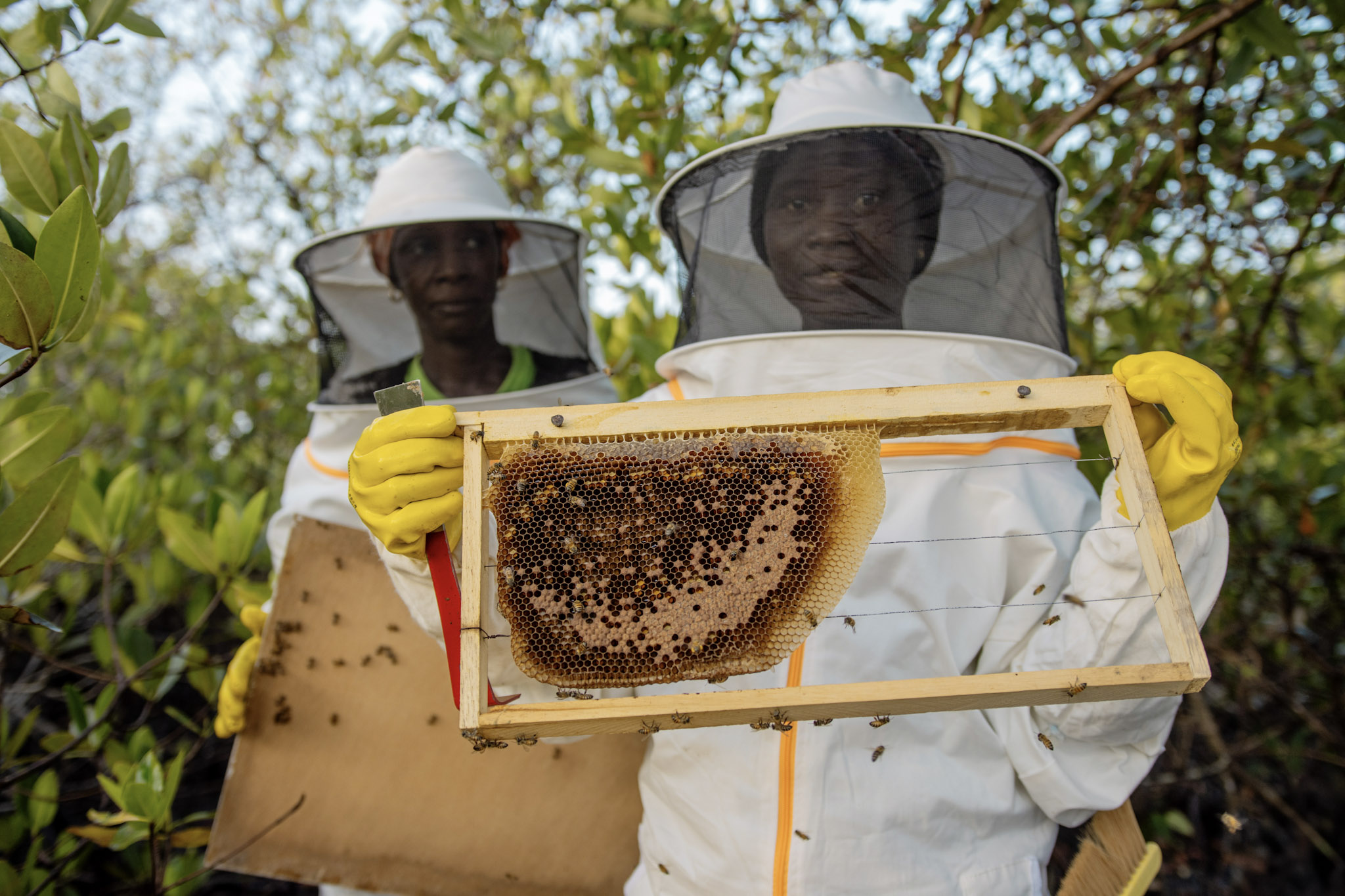
Women beekeepers in Casamance, Senegal hold frames of honeycomb. The honey they harvest can then be processed and sold, providing an additional source of income for women and their families. Their livelihoods are closely tied to the land around them: healthy forests and flowering plants sustain the bees, while the bees help pollinate and regenerate the ecosystems communities depend on.
Photo: Creative Studio Senegal
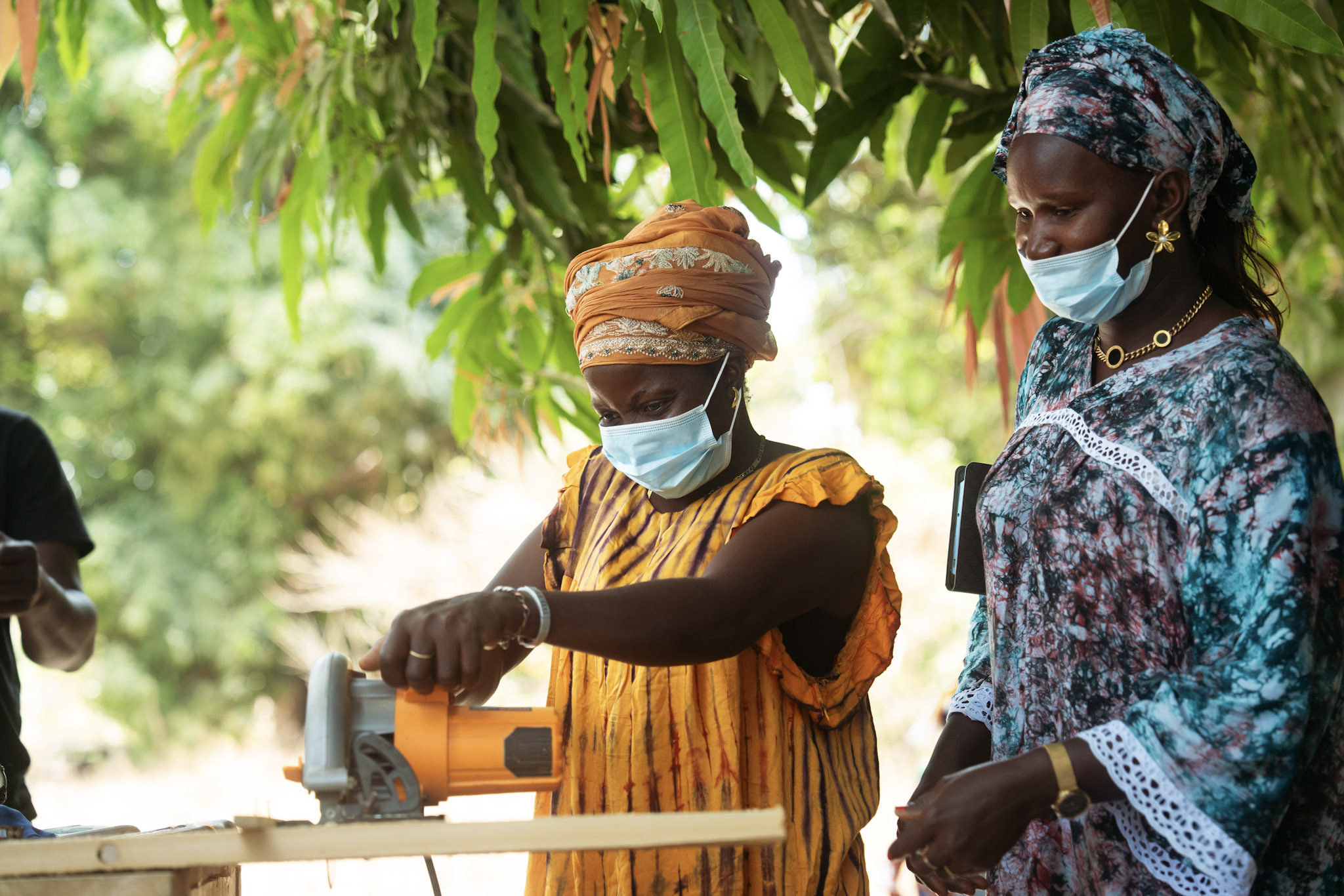
Safiatu Indjai (left) and Mama Sambu (right), women farmers from Guinea-Bissau, learn to build a wooden beehive while participating in a learning exchange supported by Inter Pares and SUCO in Senegal. Making the hives requires using power tools that, in her community, are usually handled by men. Learning to use the tools herself means she can build and maintain beekeeping equipment without having to depend on someone else to do it for her.
Photo: Cherif Khoury/Inter Pares
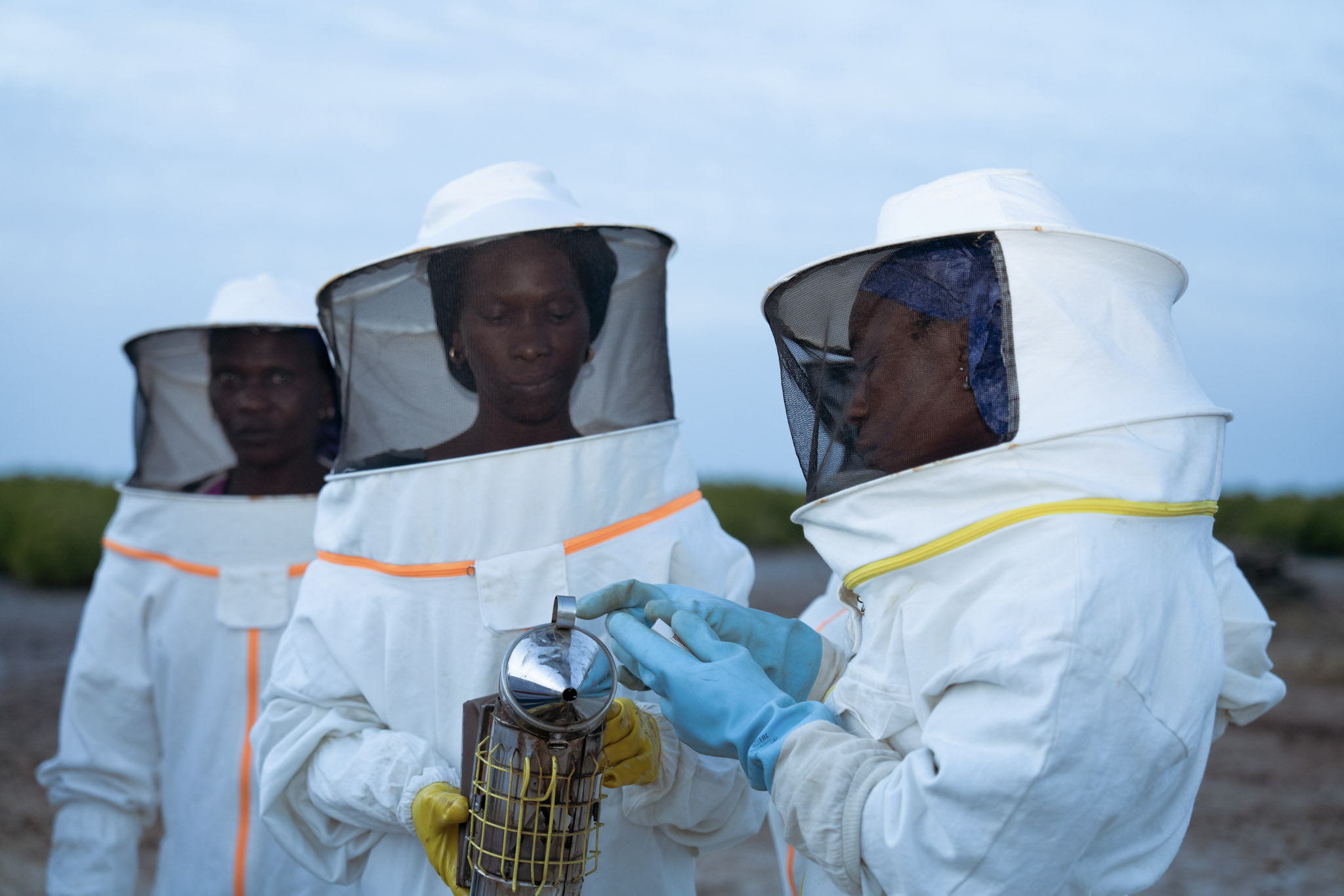
Women from Guinea-Bissau learn how to harvest honey during a learning exchange supported by Inter Pares and SUCO in Senegal. Before opening the hive, beekeepers burn plants in a smoker and gently direct the smoke toward the bees. The smoke helps calm the colony, allowing the beekeepers to safely remove the honeycomb and collect the honey.
Photo: Cherif Khoury/Inter Pares
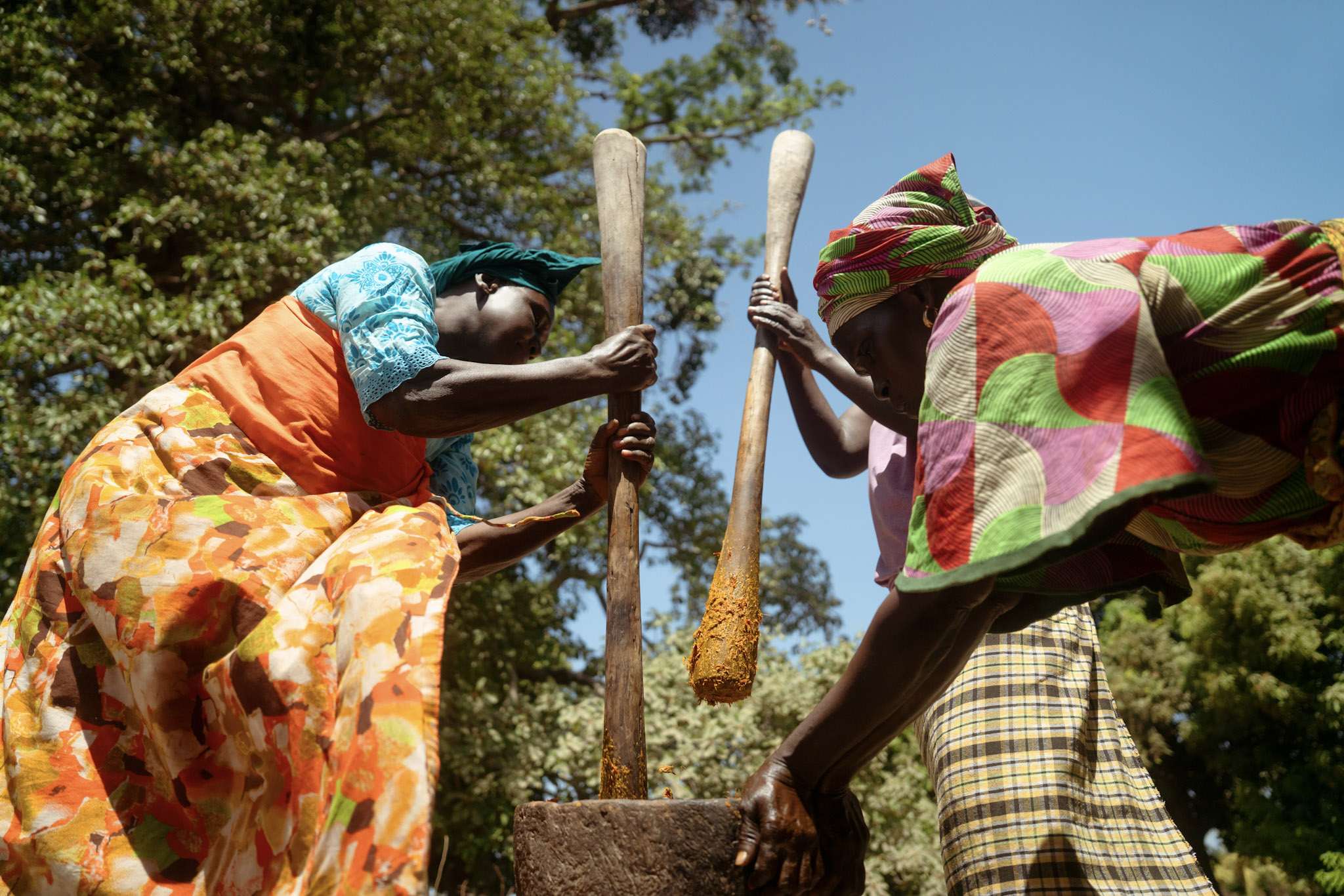
In Diannah Diamoral, a small town in the southern region of Casamance, Senegal, women work together to pound palm fruit, releasing the rich pulp used in cooking and to make palm oil.
Once rooted, palm trees flourish without irrigation, offering their fruit season after season.
What grows with little demand on the land becomes food for the table, a sought-after product at local markets, and another way for families to make a living.
Photo: Cherif Khoury/Inter Pares
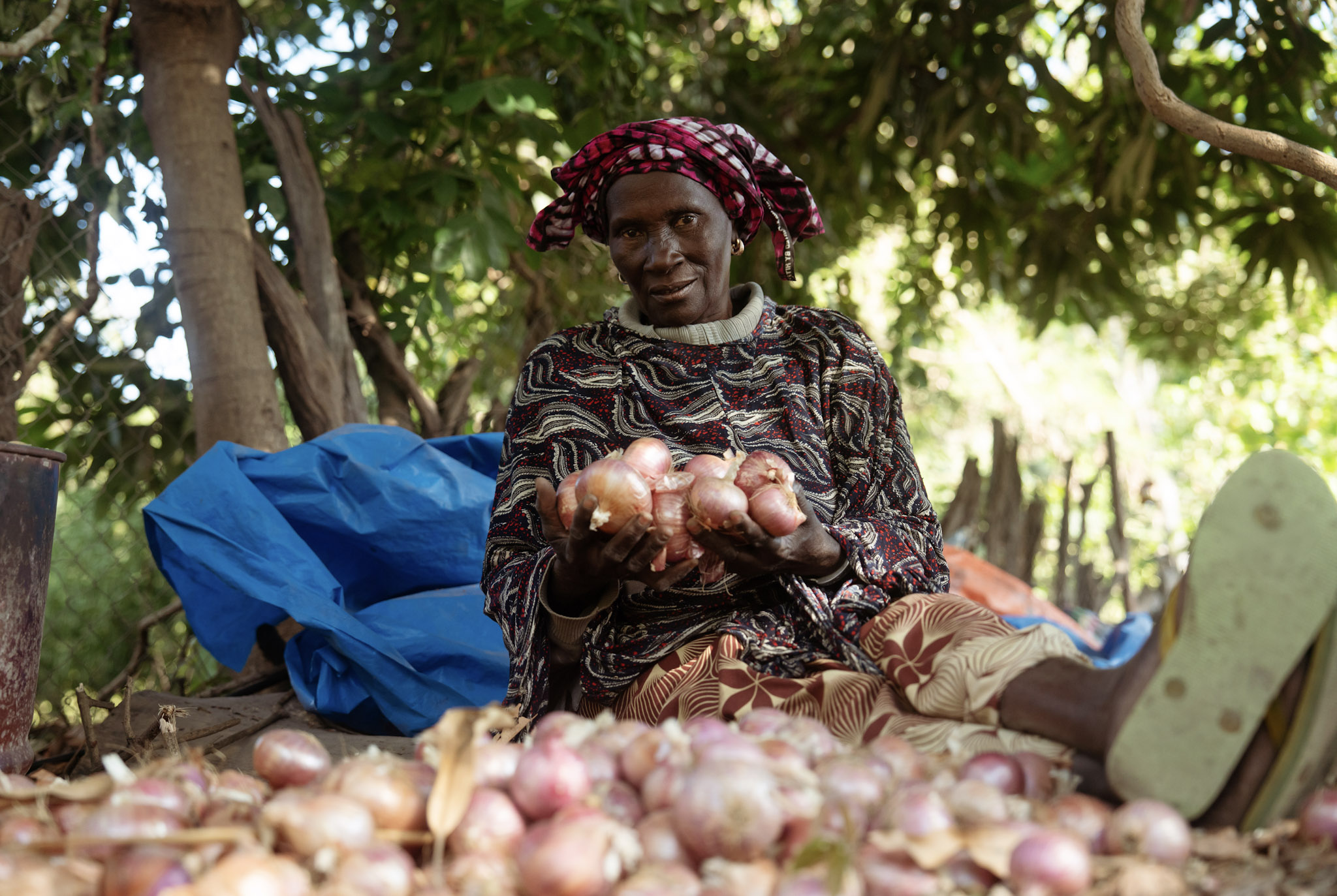
Djinille Diémé proudly holds onions from her harvest in Colomba, in the south of Senegal. When properly stored, onions can last for months, putting food within reach long after the growing season has ended. What remains beyond a family’s needs can be sold, turning a successful harvest into both food and income.
Photo: Cherif Khoury/Inter Pares
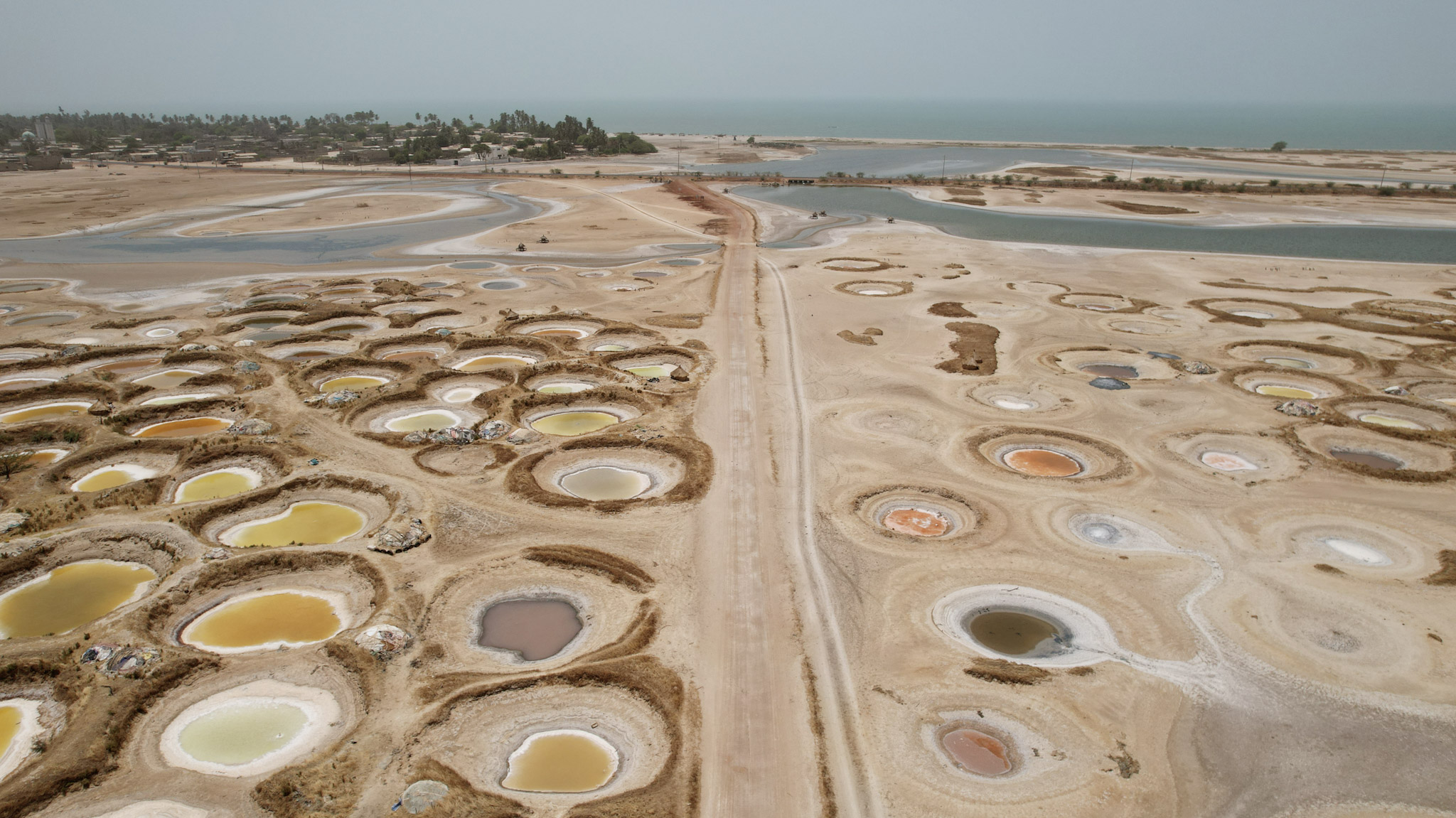
Along Senegal’s coast, seawater gathers in shallow wells, where sun and time slowly leave salt behind. Harvested from this meeting of land and sea, salt provides both a staple for local communities and an important source of income for women in the Palmarin region.
Inter Pares’ counterpart Enda Pronat works alongside women salt harvesters, providing boots and gloves to make their work safer and supporting them to bring their salt to market. This helps women turn a resource drawn from their own landscape into a safer and more sustainable livelihood.
Photo: Creative Studio Senegal
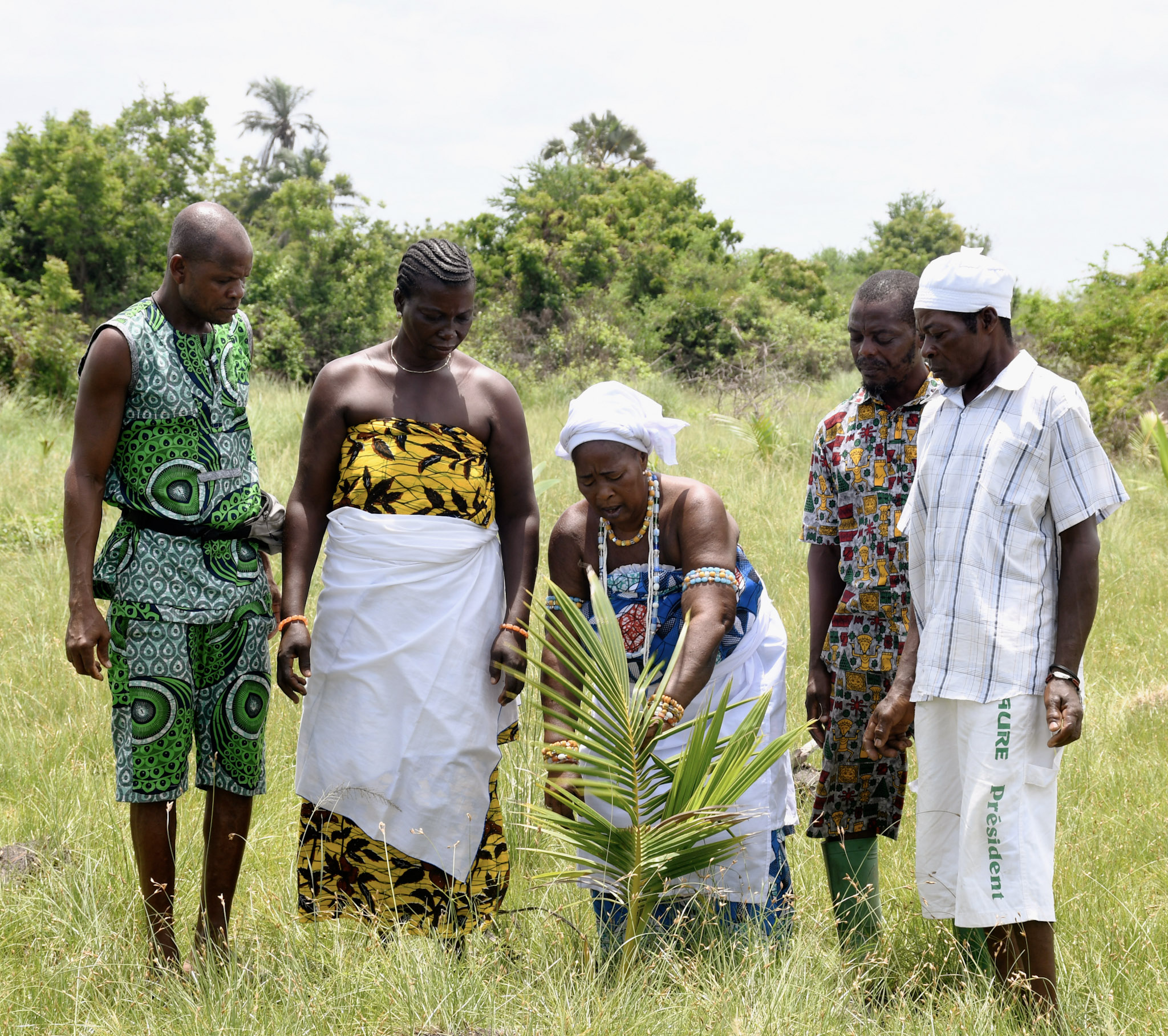
In Togo, caring for the land is deeply connected to spirituality and knowledge passed down through generations. On Gnin Island, Vodún priestesses and members of the Miwonovi cooperative care for coconut trees planted to help restore the island’s ecosystem.
Bringing these perspectives together with new approaches to restoration means building on knowledge that already lives within the community—not replacing it.
Protecting the land is not only about what is planted today. It is also about valuing the knowledge, practices and relationships with nature that have helped care for it across generations.
(L) to (R): Akollor Edoh, member of the Miwonovi cooperative; Agnès Edoh, Vodún priestess; Adakou Attiogbe, Vodún priestess and vice-president of the Miwonovi cooperative; Tonou Amévi Claude, secretary of the cooperative; Folly Afanko Comlan, first rapporteur of the cooperative.
Photo: ALMATIK/ INADES-Formation Togo
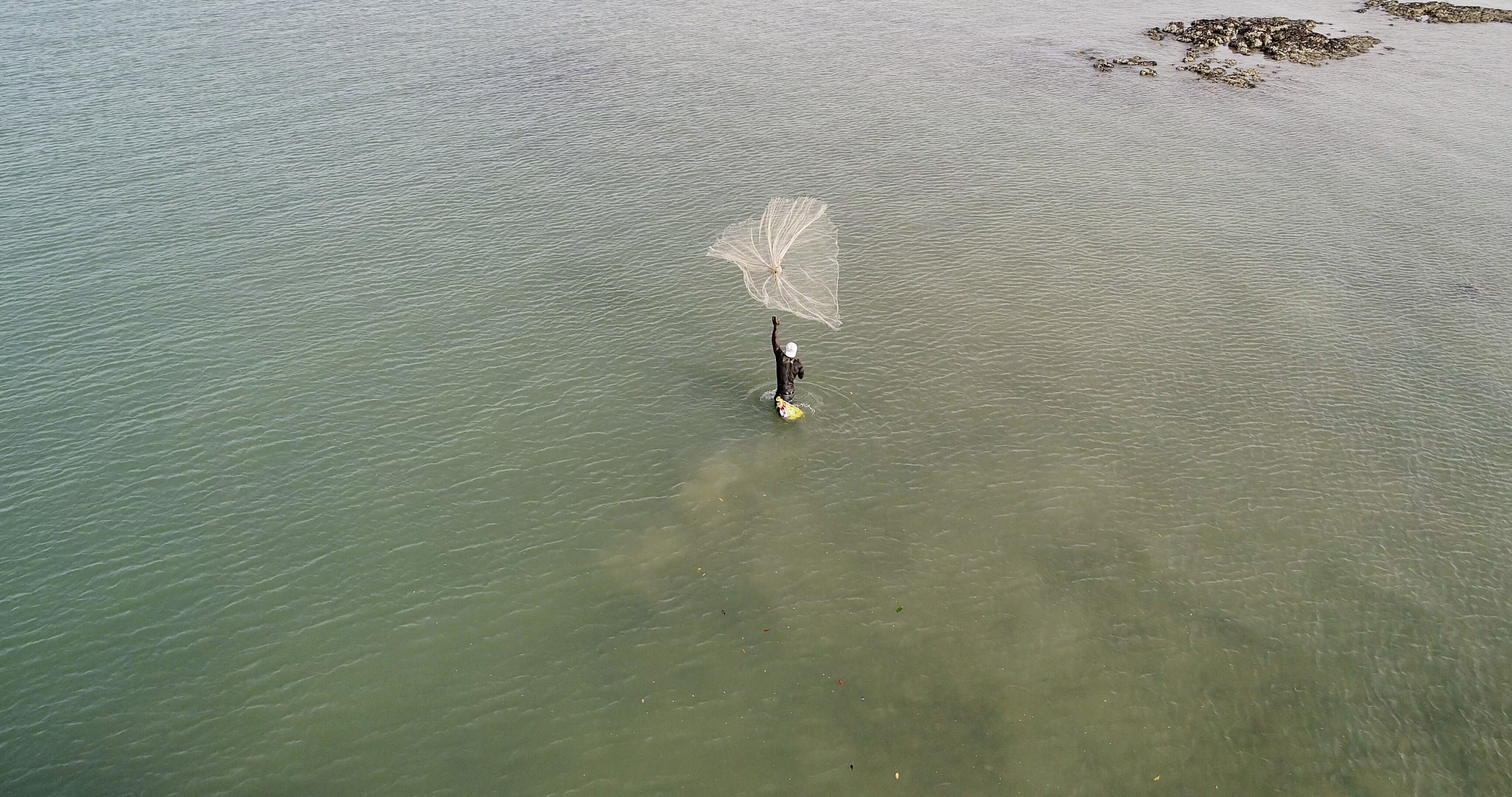
In the coastal waters off Formosa Island, Guinea-Bissau, a young fisher casts a net. Knowing when, where and how to fish is knowledge gained over a lifetime on and alongside the water. Valuing these traditional practices helps communities care for fish populations while keeping alive the skills and knowledge rooted in the islands.
Photo: Emmanuel Ramos/Tiniguena
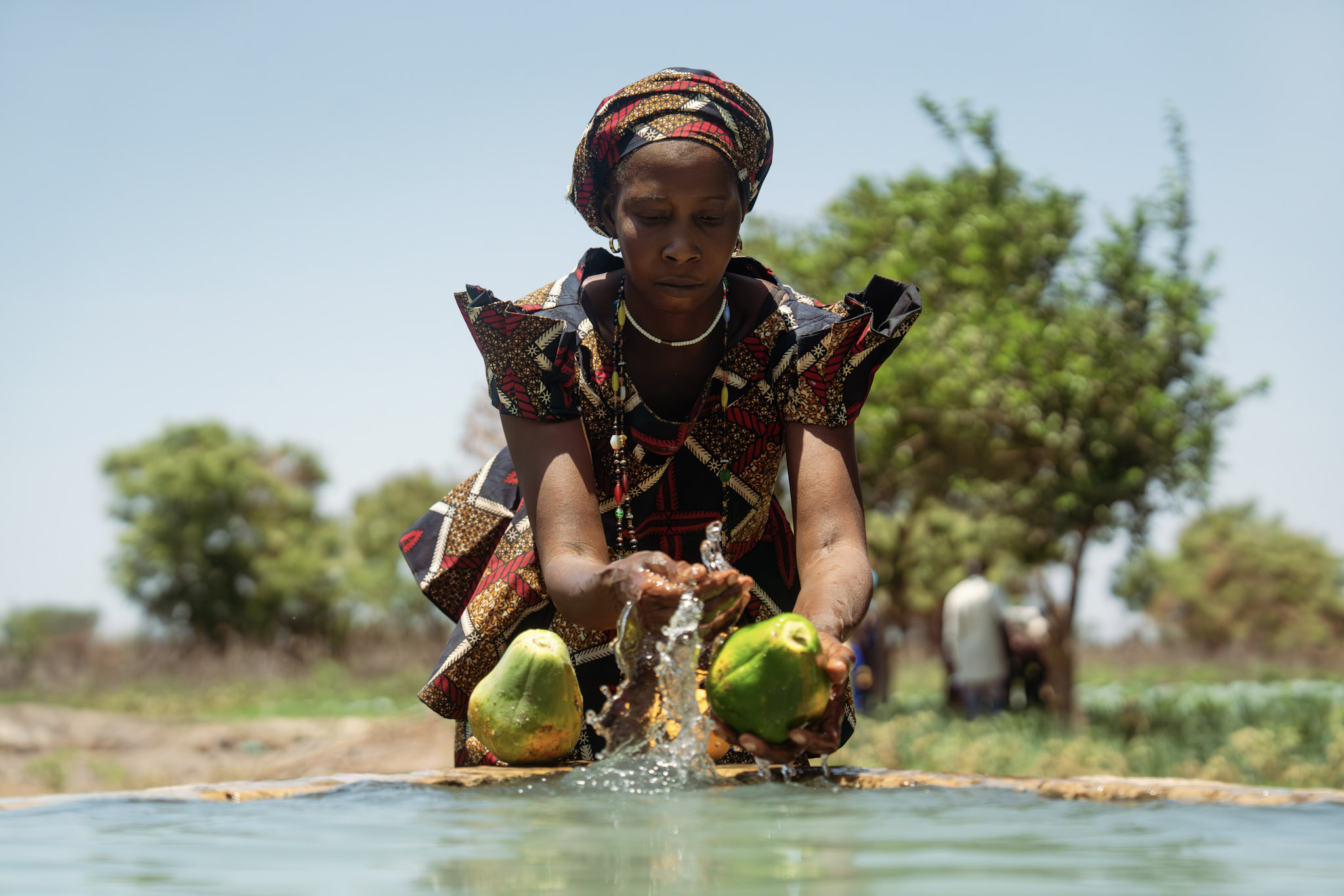
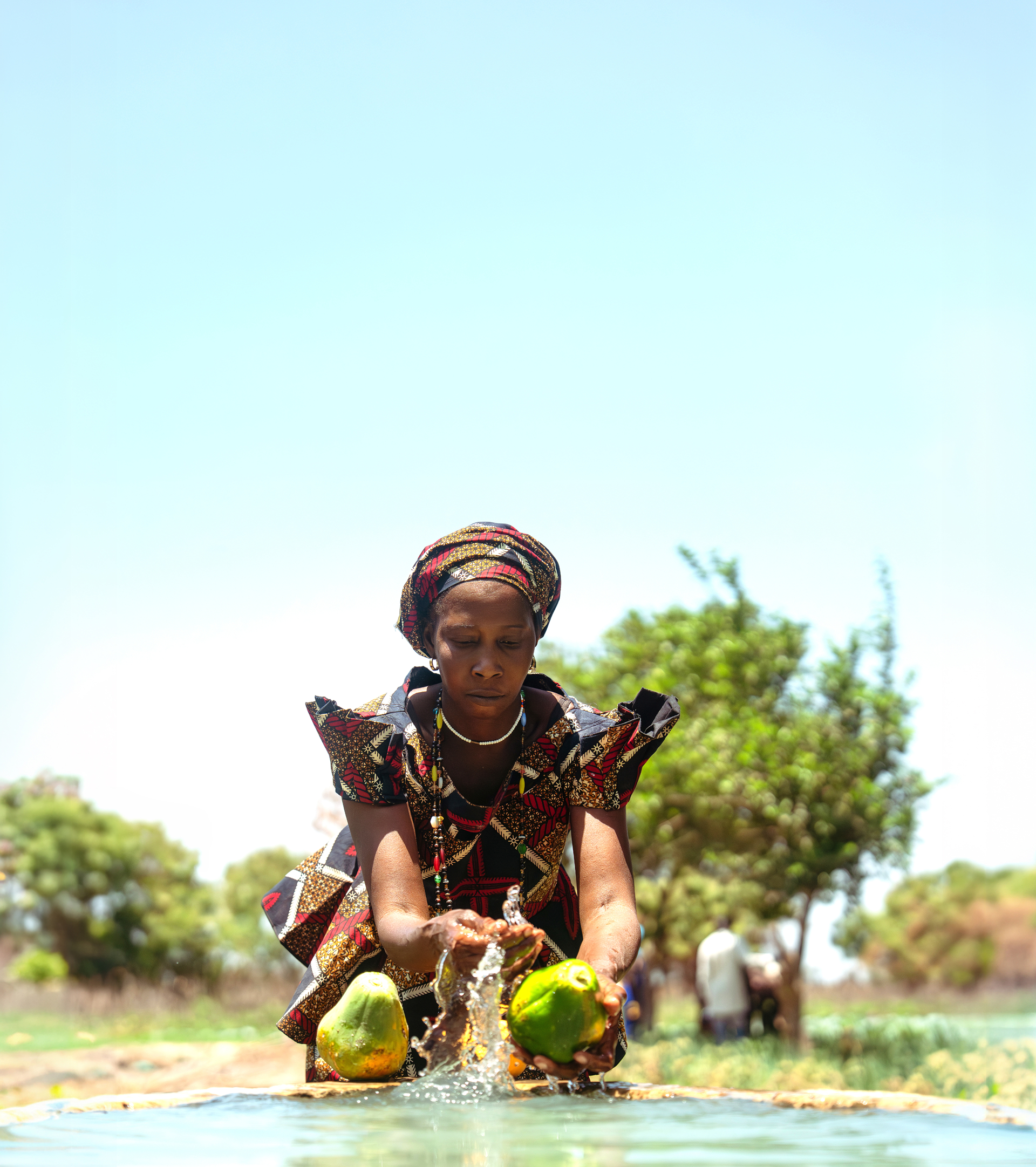
In the community of Tendouk, Casamance, Senegal, Diatty Fofana rinses papayas grown in a community garden. Wells built with support from the project have made it possible to grow a greater variety of fruits and vegetables. What grows here nourishes families and communities, while opening new possibilities for women to earn a living from what they grow.
Photo: Cherif Khoury/Inter Pares
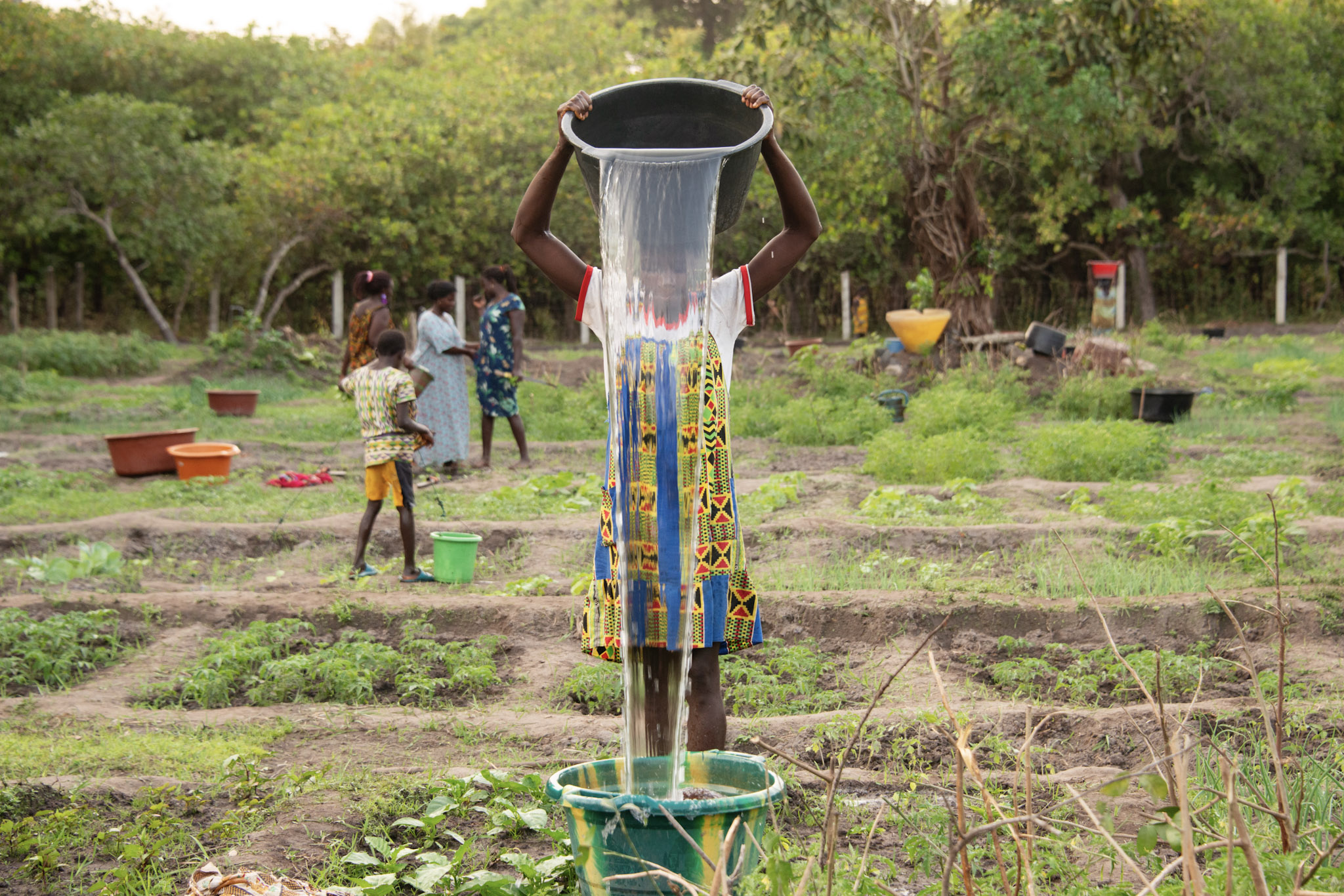
On Formosa Island in Guinea-Bissau, water is precious. Every harvest depends on it. Solar-powered pumps and pipes now bring water closer to the plots, reducing both the water lost along the way and the physical work of irrigation. While new tools help make the work lighter and every drop go further—farming on the island remains rooted in traditional knowledge.
Photo: Emmanuel Ramos/Tiniguena
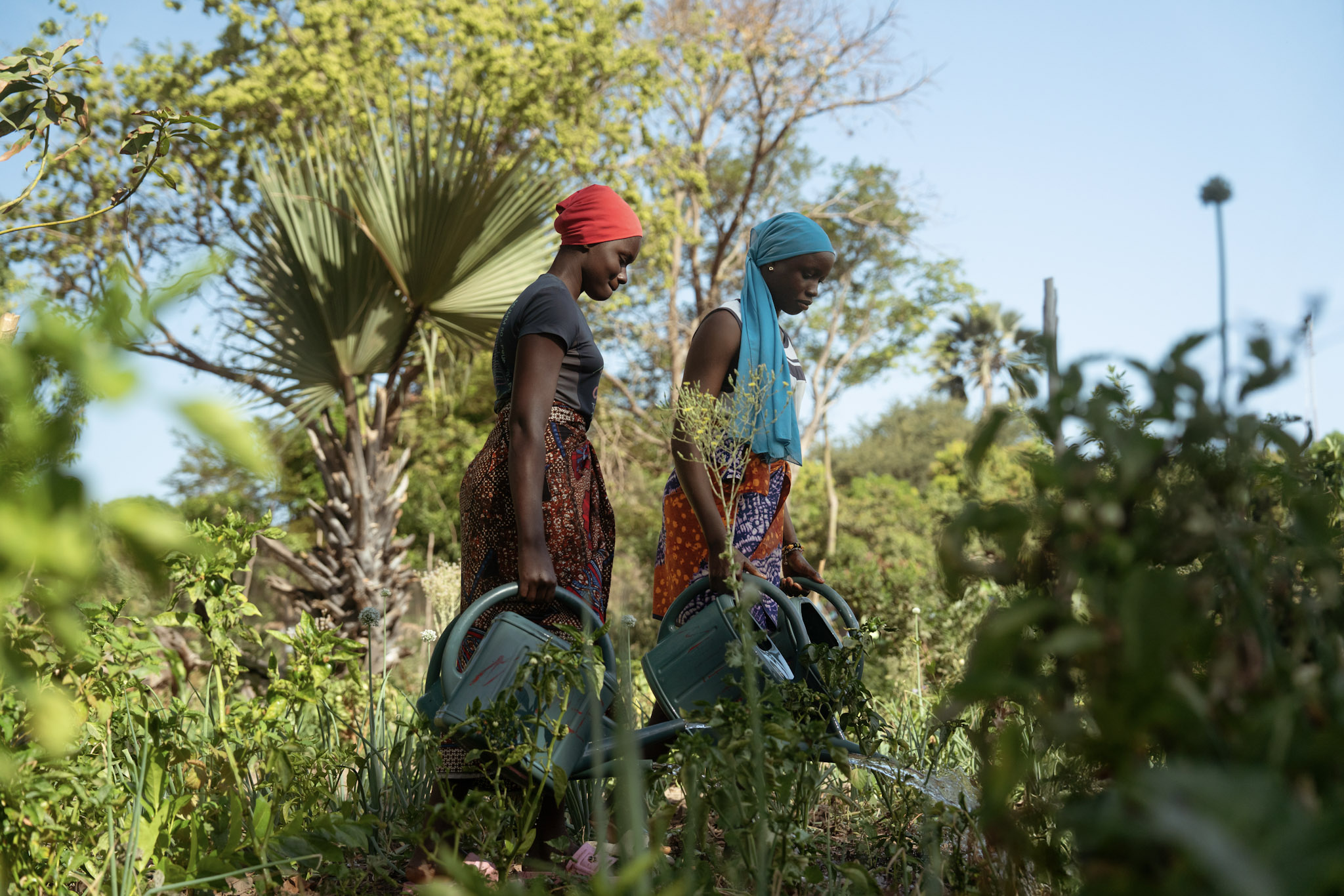
Lalia (left) and Tening (right) Mané water a community garden in Colomba, Senegal, taking their turn in work often carried by their mothers. As knowledge of the land passes from one generation to the next, so too does the responsibility of caring for the land for future harvests. Sharing the load also gives women more time for other opportunities, like making their voices heard in community decisions.
Photo: Cherif Khoury/Inter Pares
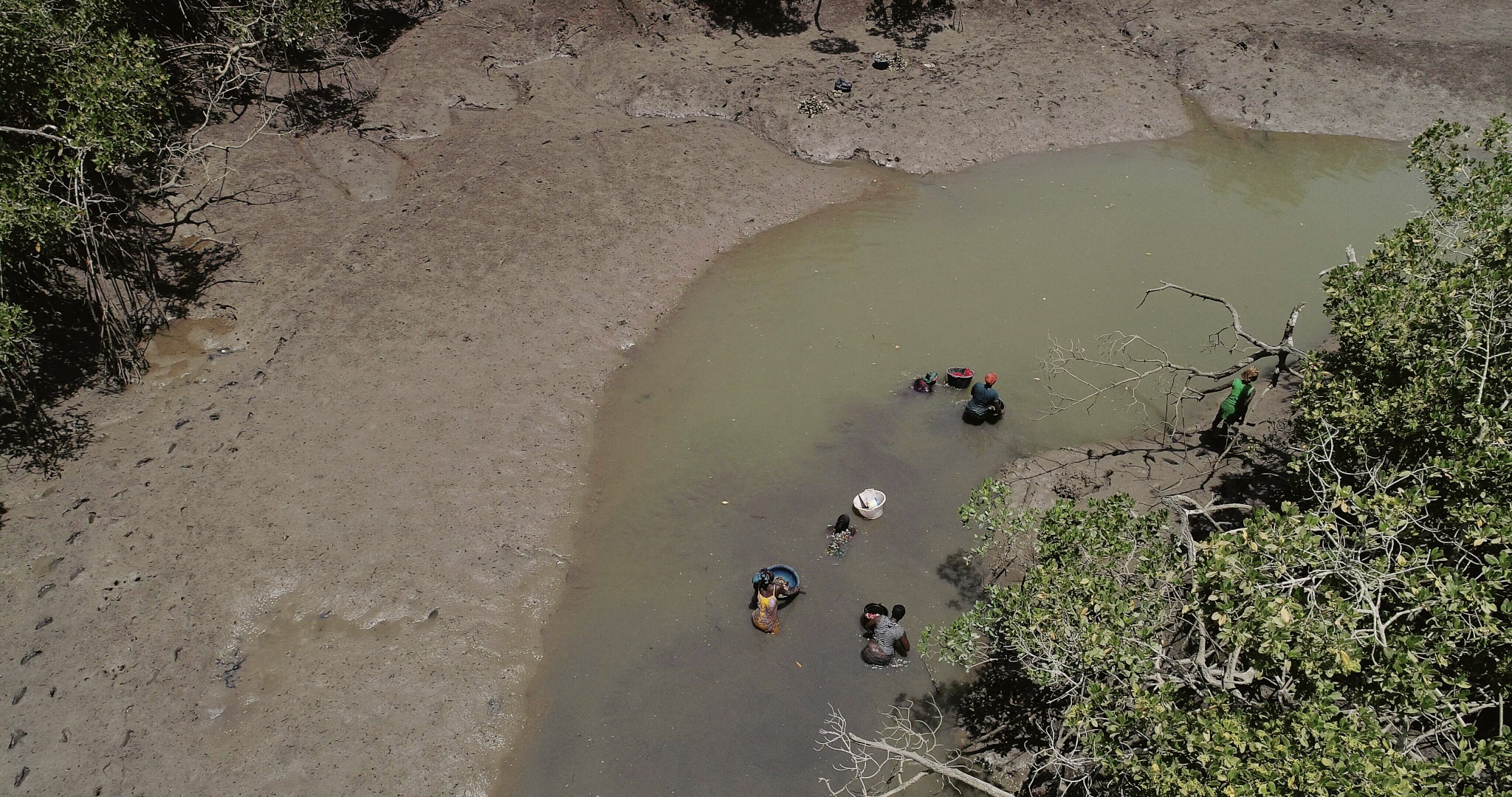
At low tide, young women from Urok, Guinea-Bissau, make their way through the mangrove channels to gather oysters. Their work follows the rhythm of the tides and draws on an intimate knowledge of this changing landscape. Knowing when and where to harvest—and when to leave the mangrove undisturbed—is part of caring for the ecosystem that sustains life across the islands.
Photo: Emmanuel Ramos/Tiniguena
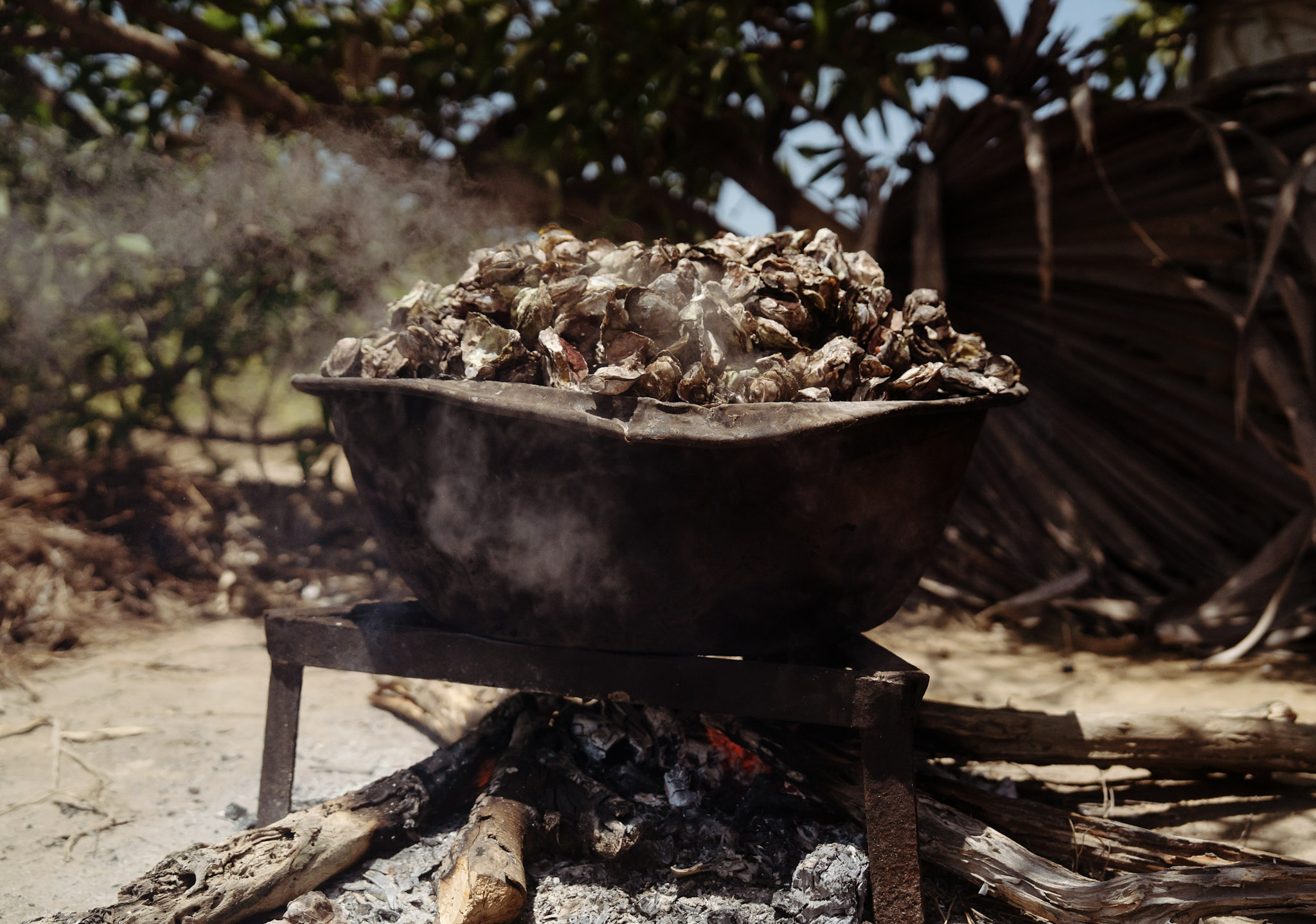
Freshly harvested oysters are cooked over a wood fire in Kafountine, Senegal. Heating the oysters helps open their shells, making it easier to remove the meat inside—the first step in preparing the harvest for eating, preserving and selling.
Photo: Cherif Khoury/Inter Pares
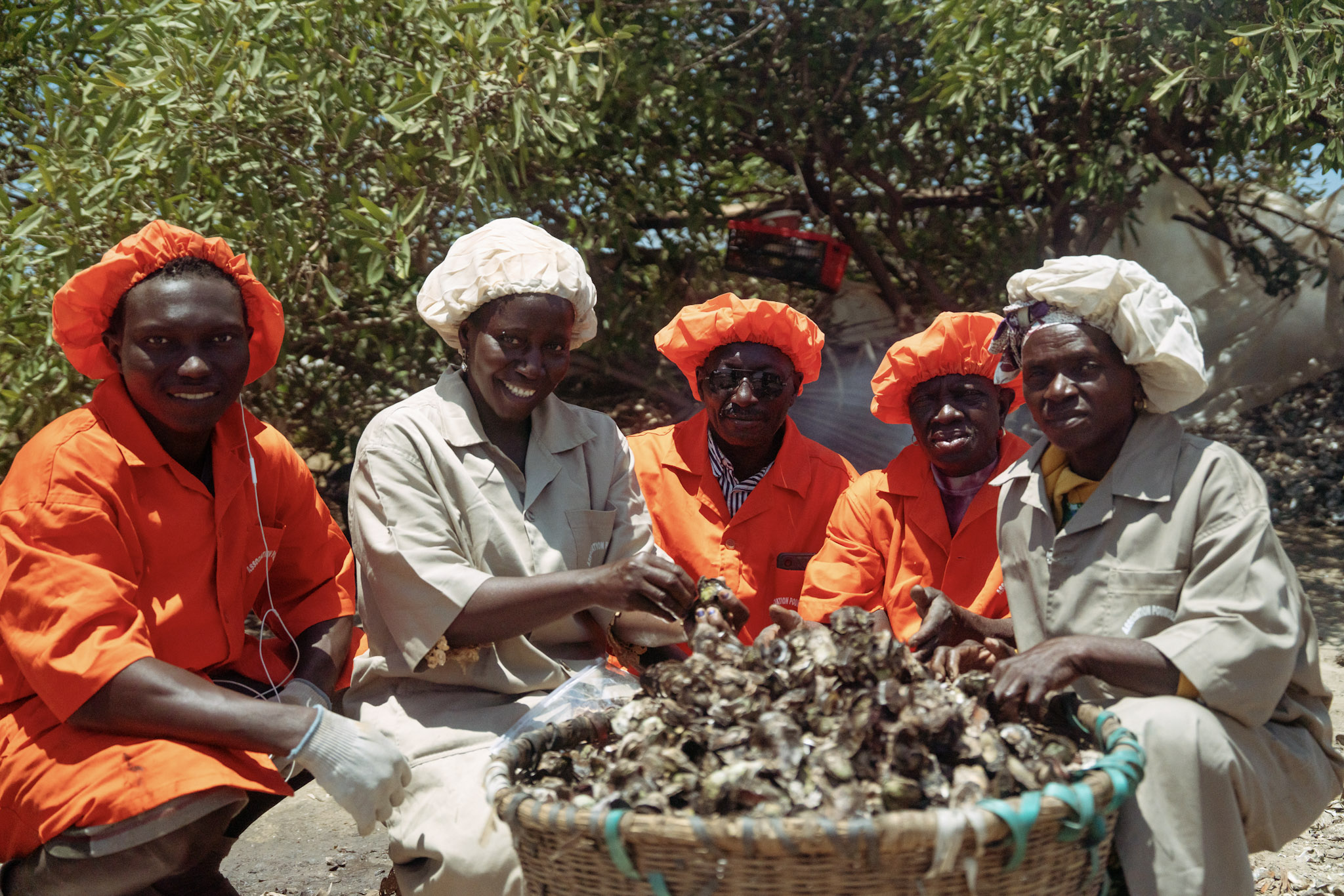
Oyster harvesters near Abéné, Senegal gather to shell and prepare the day’s harvest. Some of the oysters will be enjoyed by local families while others will be preserved and sold.
Photo: Cherif Khoury/Inter Pares
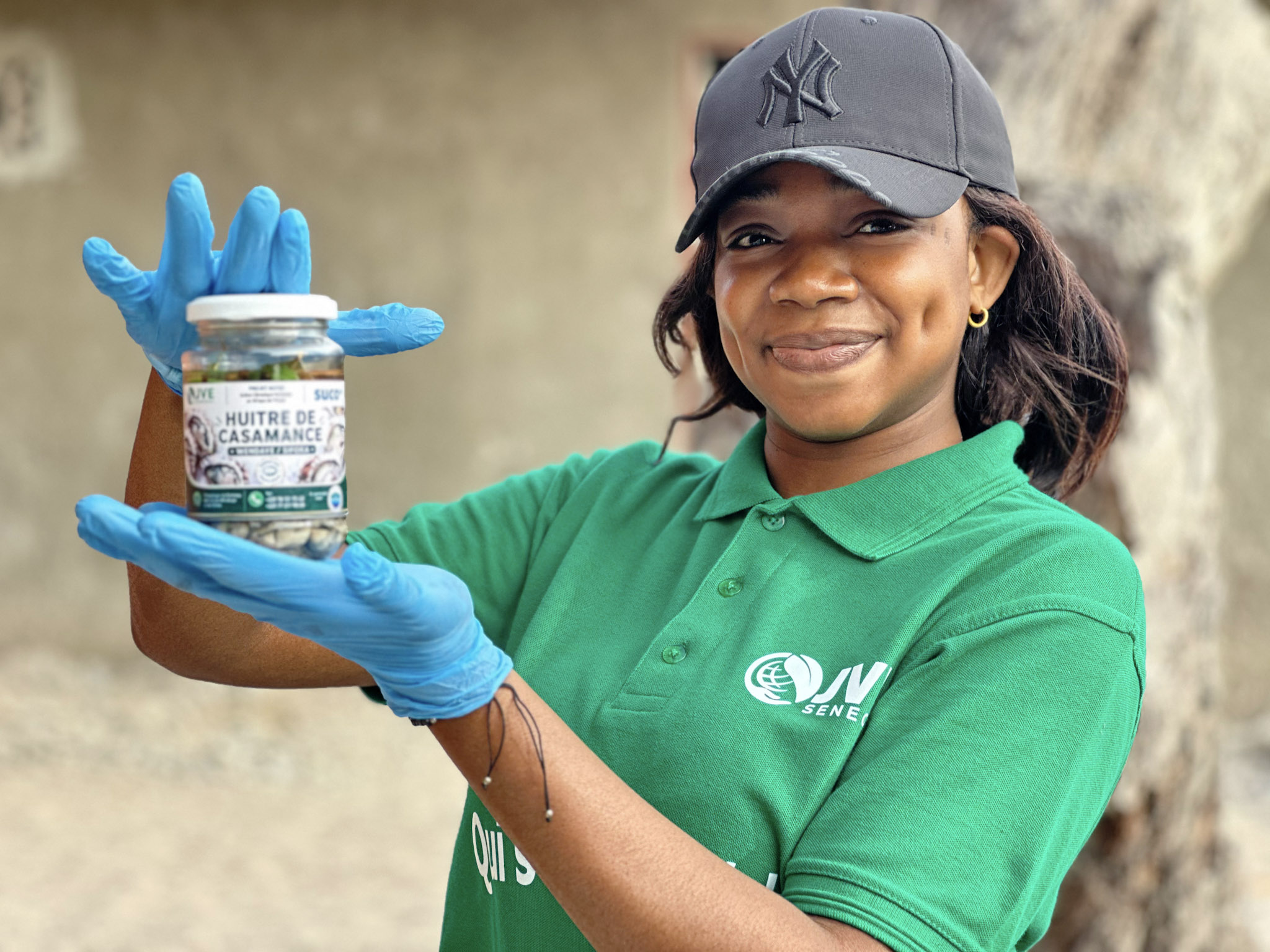
Mairame Sy of Jeunes Volontaires pour l’Environnement du Sénégal (JVE Sénégal) holds a jar of oysters that has been prepared, preserved and packaged for sale. Turning the harvest into a finished product helps it travel beyond the islands, reaching new markets and new customers.
From mangrove to market, more of the value of what women harvest can remain in their hands.
Photo: Djibril Niang/JVE Senegal
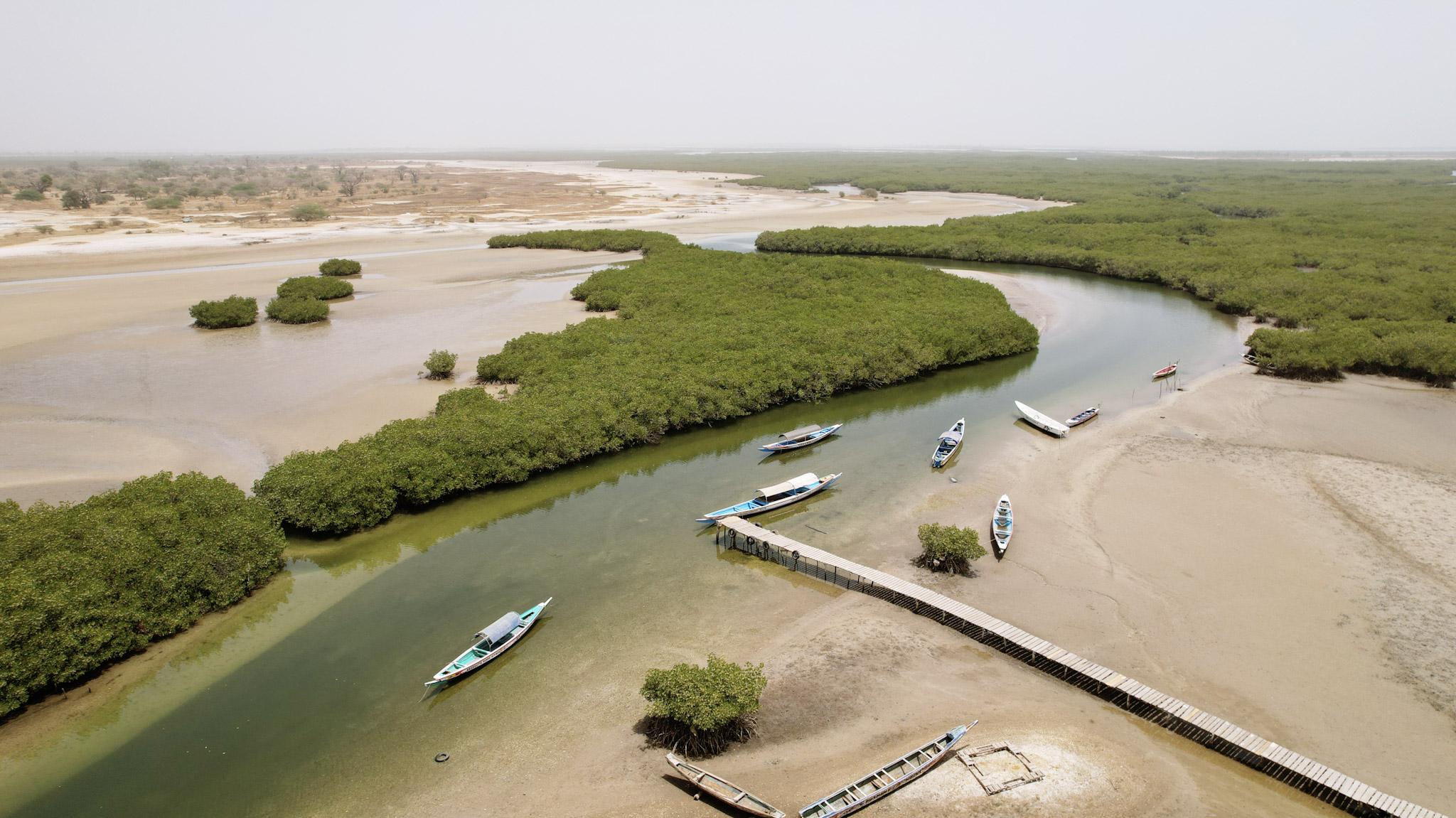
Where land meets water, mangroves form a living barrier along the coast in Palmarin, Senegal. Their roots hold the shoreline in place, and, for coastal communities in West Africa, what thrives among these roots sustains life well beyond them.
Photo: Creative Studio Senegal
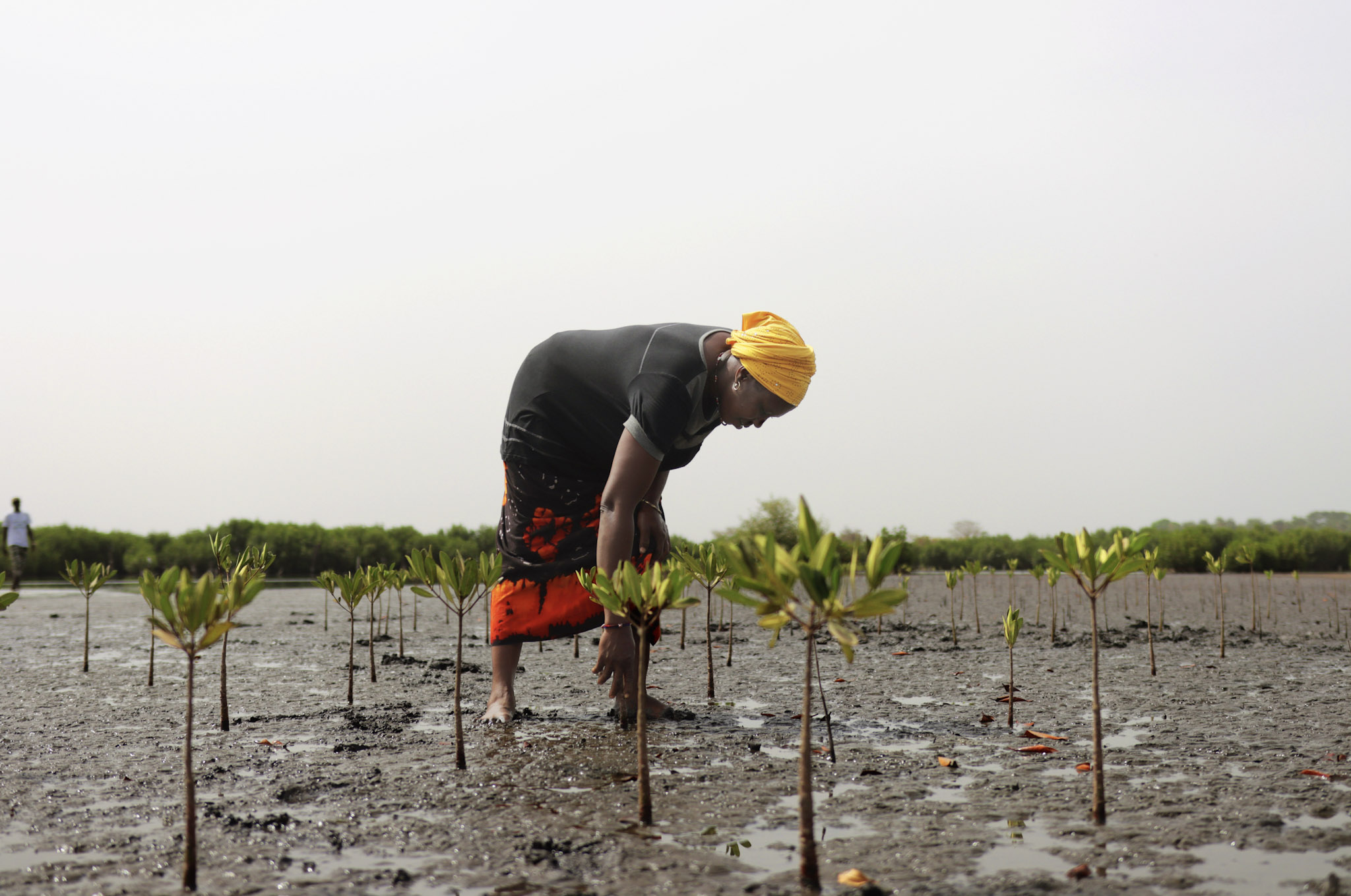
One seedling at a time, communities are bringing deforested mangroves back to life. Here, Fatou Mané, president of the Bã Guinfina women’s group in Djibanar, Senegal, plants a young mangrove seedling. Over the past three years, we have supported the reforestation of more than 80 hectares of mangroves across West Africa. What begins with a seedling in the mud can grow into an entire ecosystem.
Photo: Creative Studio Senegal
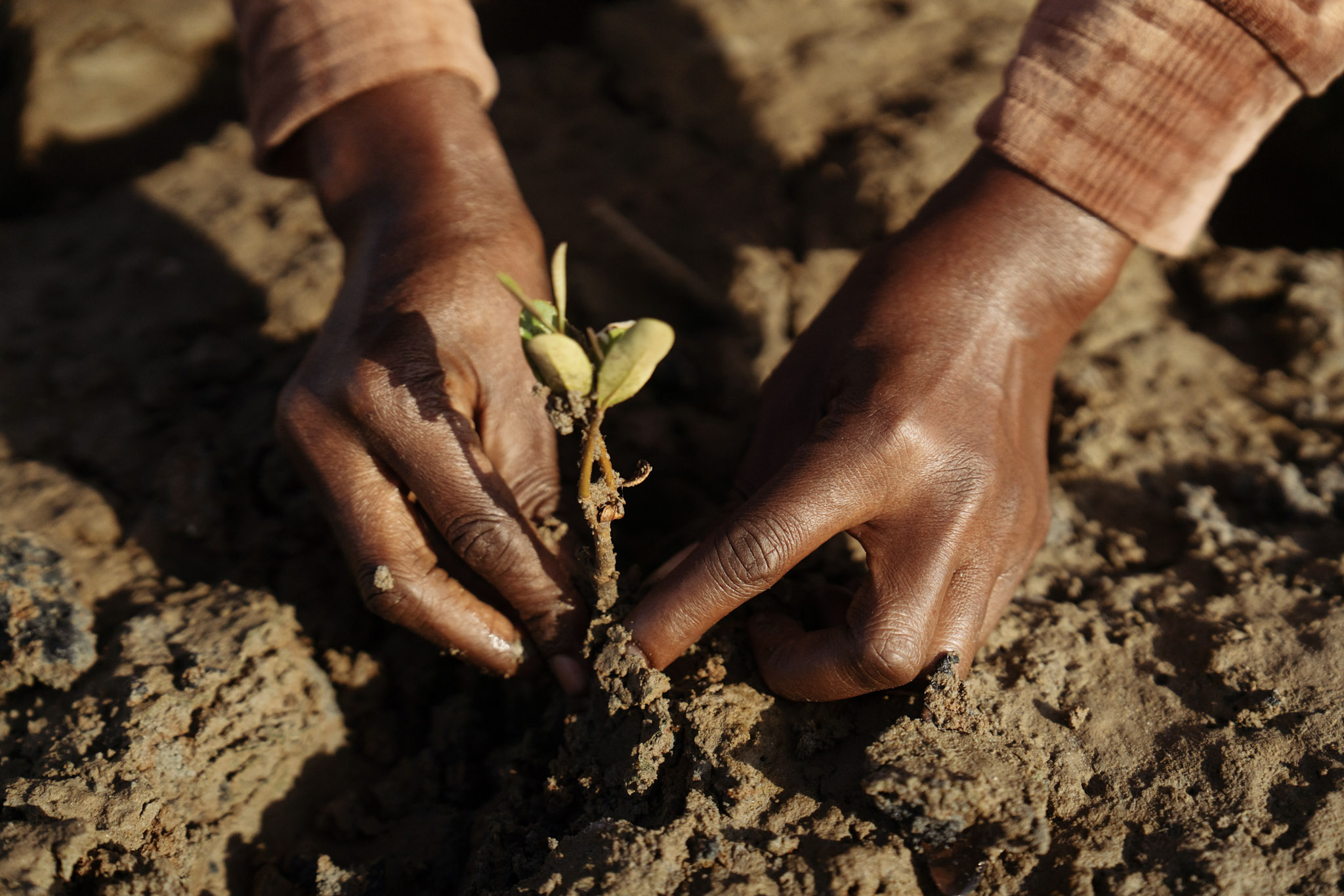
A young mangrove seedling is pressed into the wet earth by hand. It will take years for the seedling to become part of the dense forest around it, but mangrove restoration begins here: one pair of hands, one tree, one patch of shoreline at a time.
This is where change takes root.
Photo: Cherif Khoury/Inter Pares
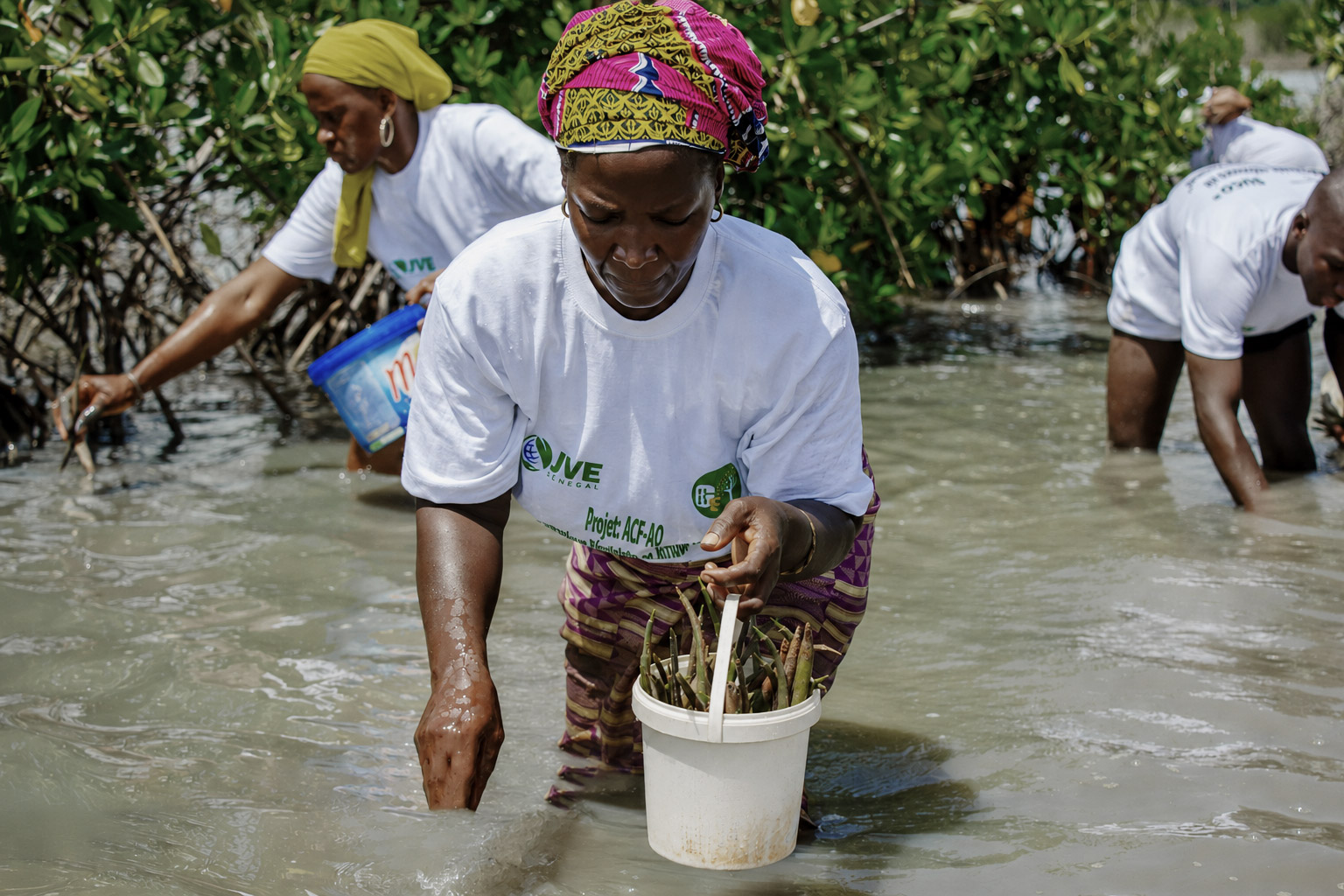
Women from the community gather young mangrove seedlings to replant in areas where the forest has been lost in Goudomp, Senegal. Carefully collected and carried to new ground, each seedling is a chance for the forest to take root again.
Photo: Mamadou Traoré/JVE Sénégal
Aa
With thanks

The work featured in this photo exhibit is part of the Feminist Climate Action in West Africa (ACF-AO) project being carried out by Inter Pares and Solidarité Union Coopération (SUCO) with financial support from Global Affairs Canada.



We are honoured to collaborate with the following local organizations: