



September 1, 2026
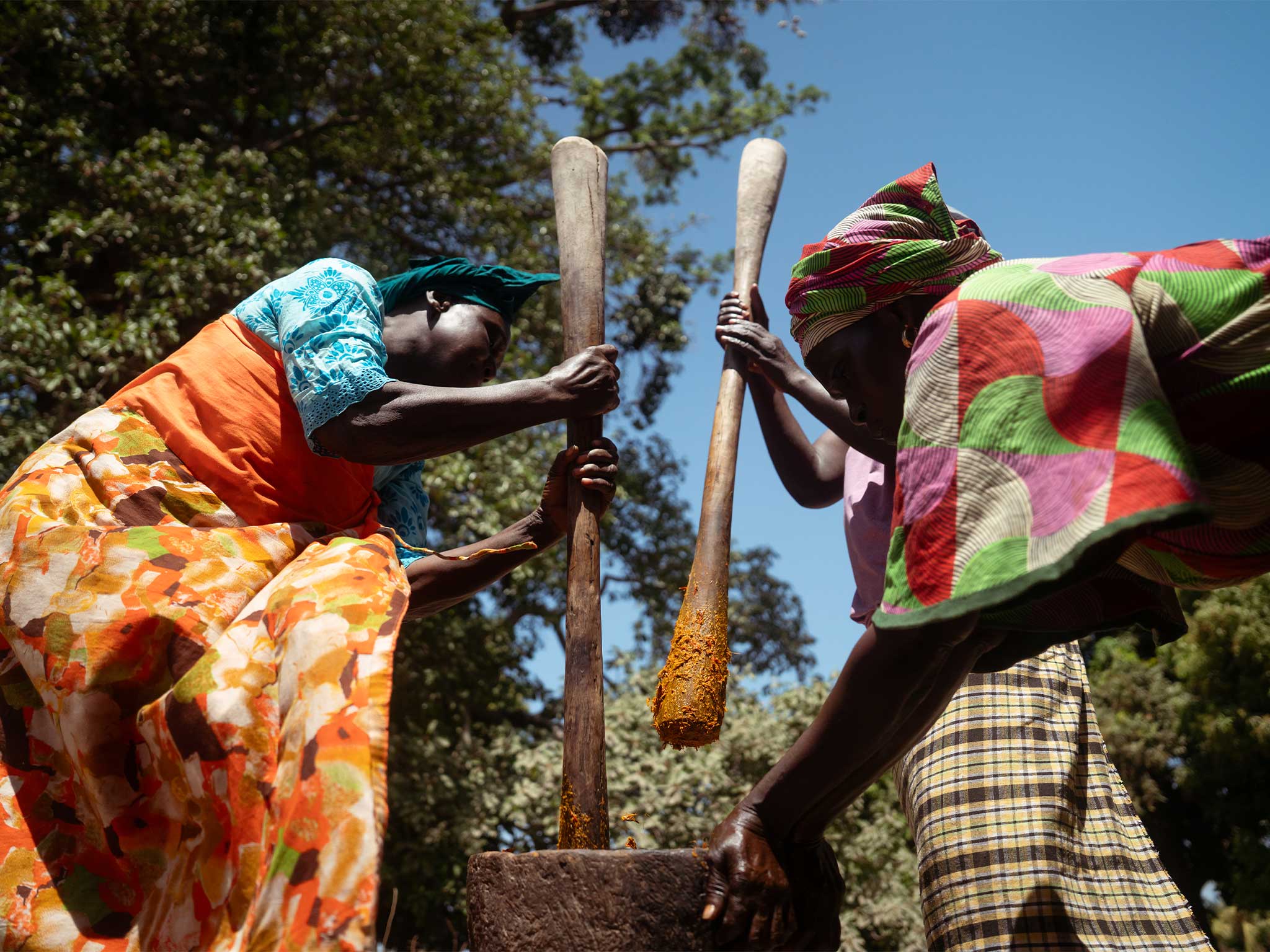
In Diannah Diamoral, a small town in the southern region of Casamance, Senegal, women work together to pound palm fruit, releasing the rich pulp used in cooking and to make palm oil.
Photo: Cherif Khoury
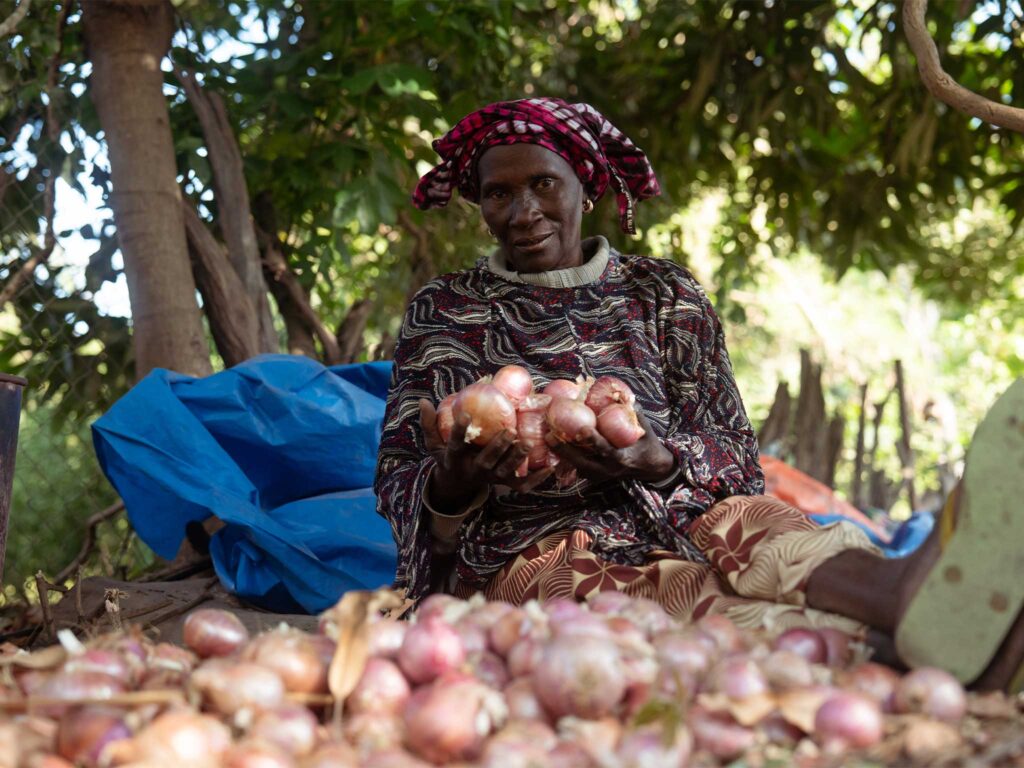
Across West Africa, women produce much of the food that nourishes families and communities.
They tend fields, harvest crops, save seeds and sell food at local markets. Their knowledge and labour are the backbone of local food systems.
And yet, women who farm often struggle to earn a fair living from it.
In Guinea-Bissau, Togo, Senegal and Burkina Faso, where our counterparts work, many women farmers face barriers to economic security at every turn. Patriarchal social norms mean what little land they have access to is often not in their names, making it a struggle to secure financing. Limited funds mean limited access to storage space and processing equipment, forcing many women sell their harvests quickly, at low prices.
Removing these barriers strengthens food systems—and local economies.
Economic power shapes political power.
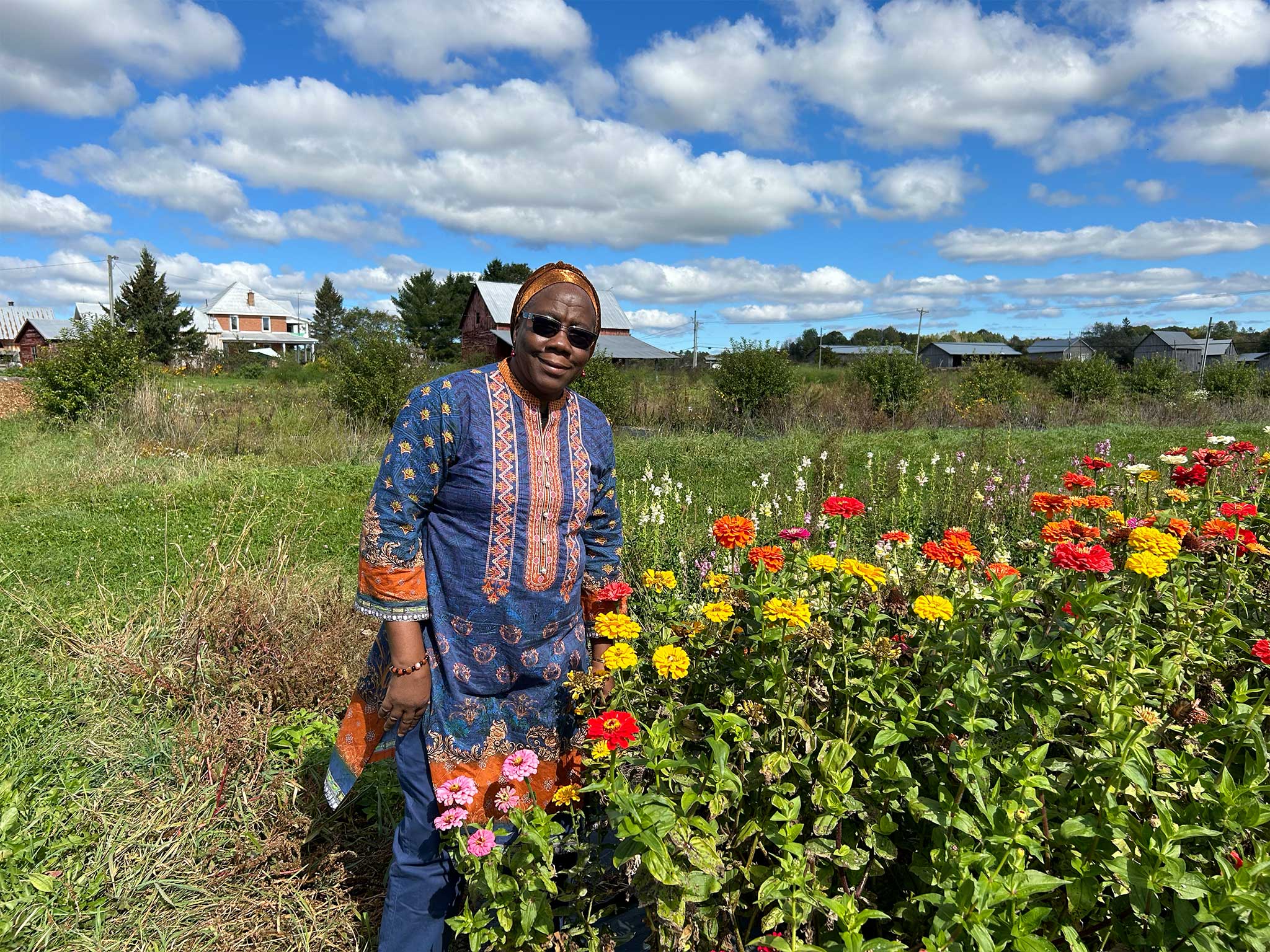
Mariamé Ouattara
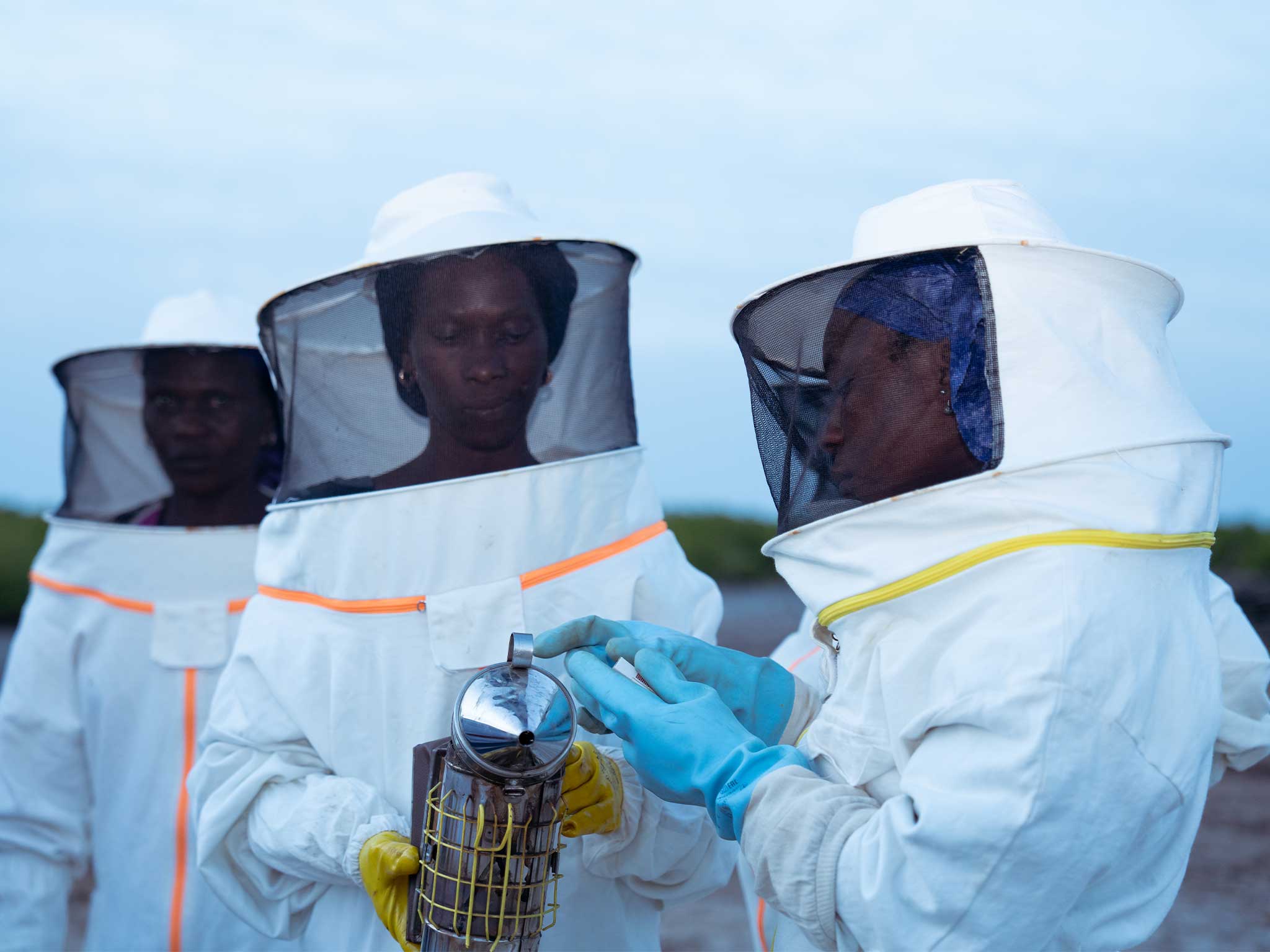
That’s why we support women’s farming cooperatives through our counterparts. Organized under a common banner, women can pool resources and collectively process and market their products. Our counterparts help the cooperatives learn how to set fair prices. Paired with the added power that comes from negotiating sales as a group, women earn more for their goods.
As for the goods themselves, women are growing the crops using agroecological methods that protect soil and biodiversity. Women are learning how to ensure that effort is recognized—and valued.
Cooperatives are also opening doors to new markets, like specialty food shops and restaurants. In Togo, for example, women traditionally cultivated and sold small quantities of raw fonio, a nutrition-packed ancient grain, after processing it by hand. It’s a labour-intensive process that limits quality. Today, co-ops we support through our counterpart Inades-Formation Togo, produce fonio in multiple formats, from flour to ready-to-cook, and earn more from the same harvest.
At a time when climate change, shrinking international assistance and growing inequality are placing enormous pressure on communities—your gift today strengthens food sovereignty, advances women’s leadership and builds lasting, locally led solutions.
When women have control over how their products are processed, marketed and sold, the benefits extend well beyond income, explains gender expert Mariamé Ouattara. Families invest more in food, health care and education. Cooperatives become stronger. Women gain confidence to negotiate with buyers, access credit and participate more actively in community life.
“Economic power shapes political power,” says Mariamé.
When women have more control over their livelihoods, they gain greater influence over decisions that affect their families, communities and futures.
This work is about more than producing food. It is about ensuring that the people who feed their communities also have the power to shape local economies, build secure livelihoods and benefit from the full value of their work.
Strengthen food sovereignty, advance women’s leadership and build lasting, locally led solutions.
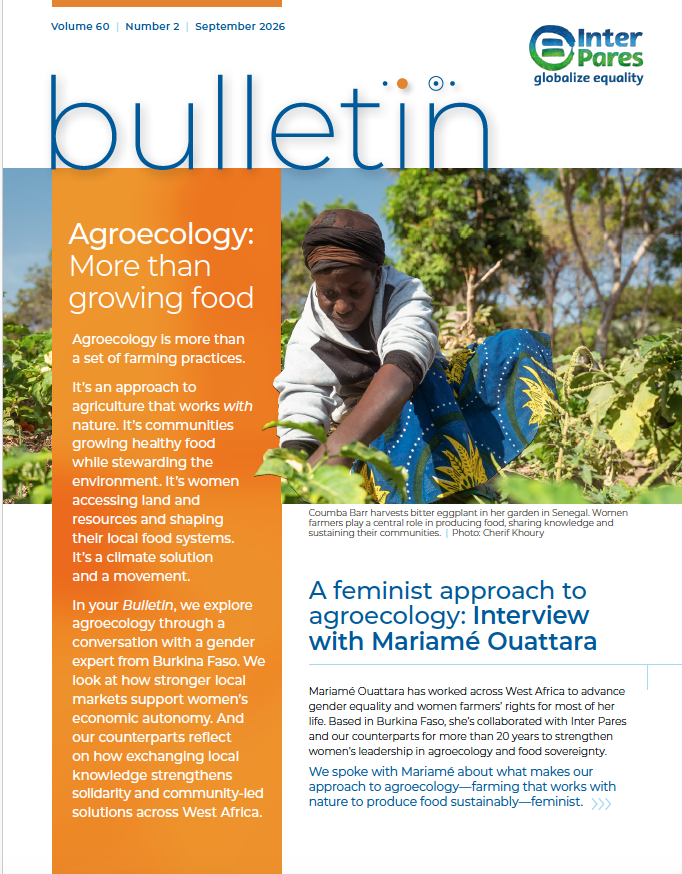
In your Bulletin, we explore how agroecology is more than a set of farming practices.
Inter Pares acknowledges Global Affairs Canada for its financial support for this project.