


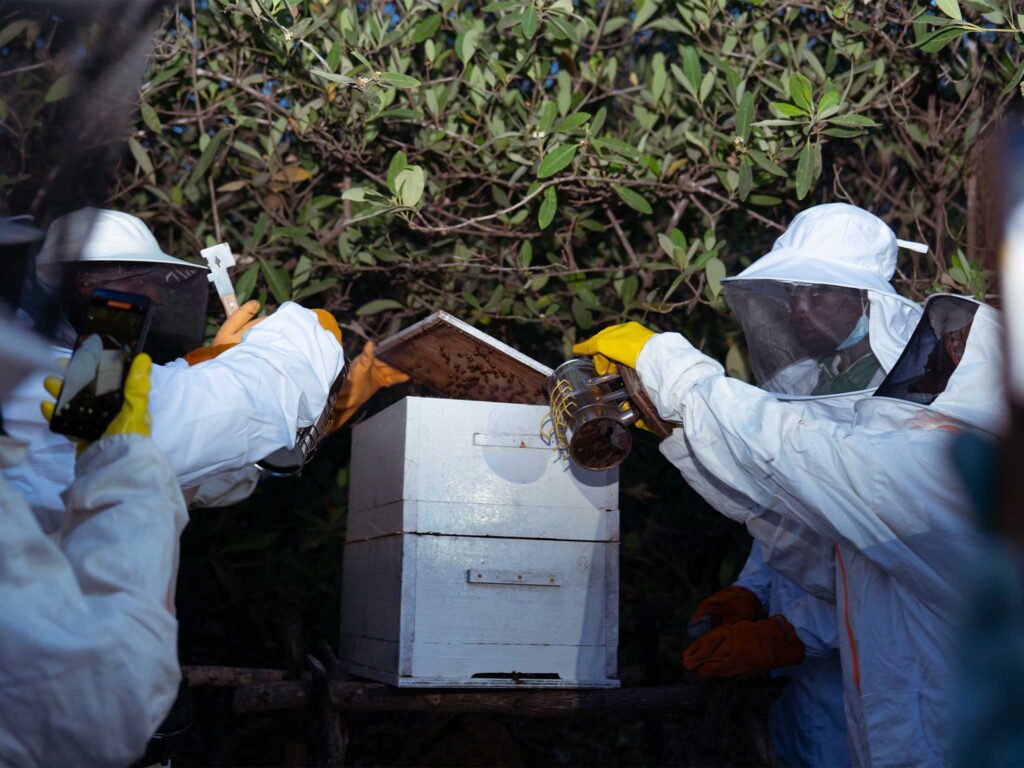
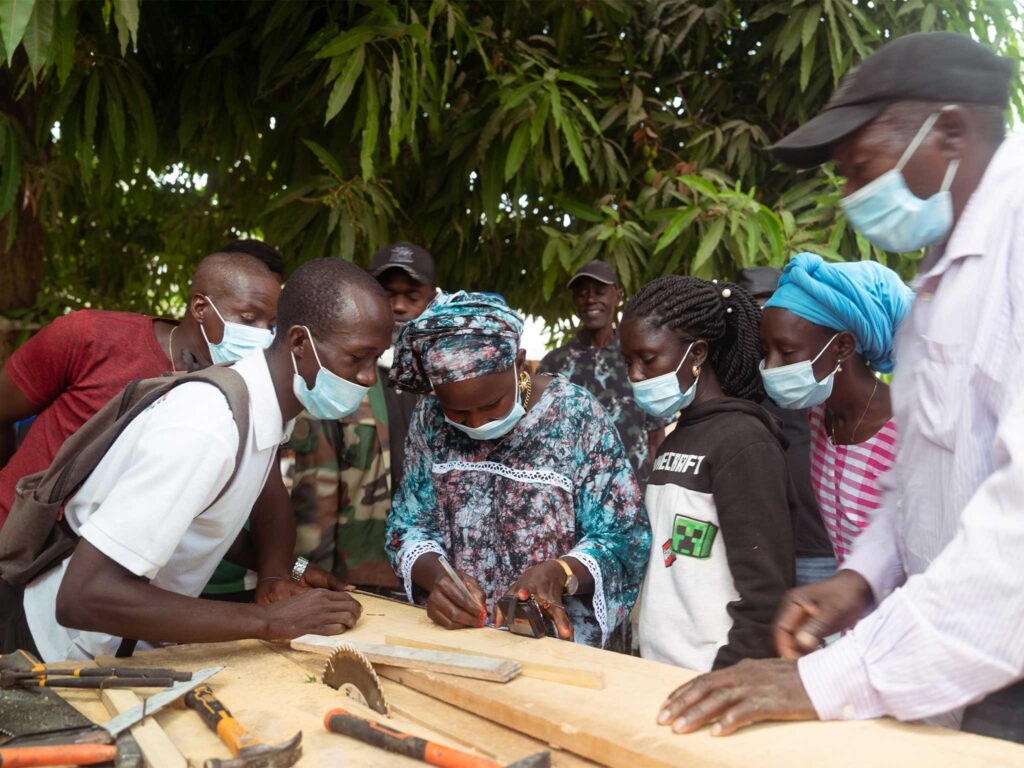
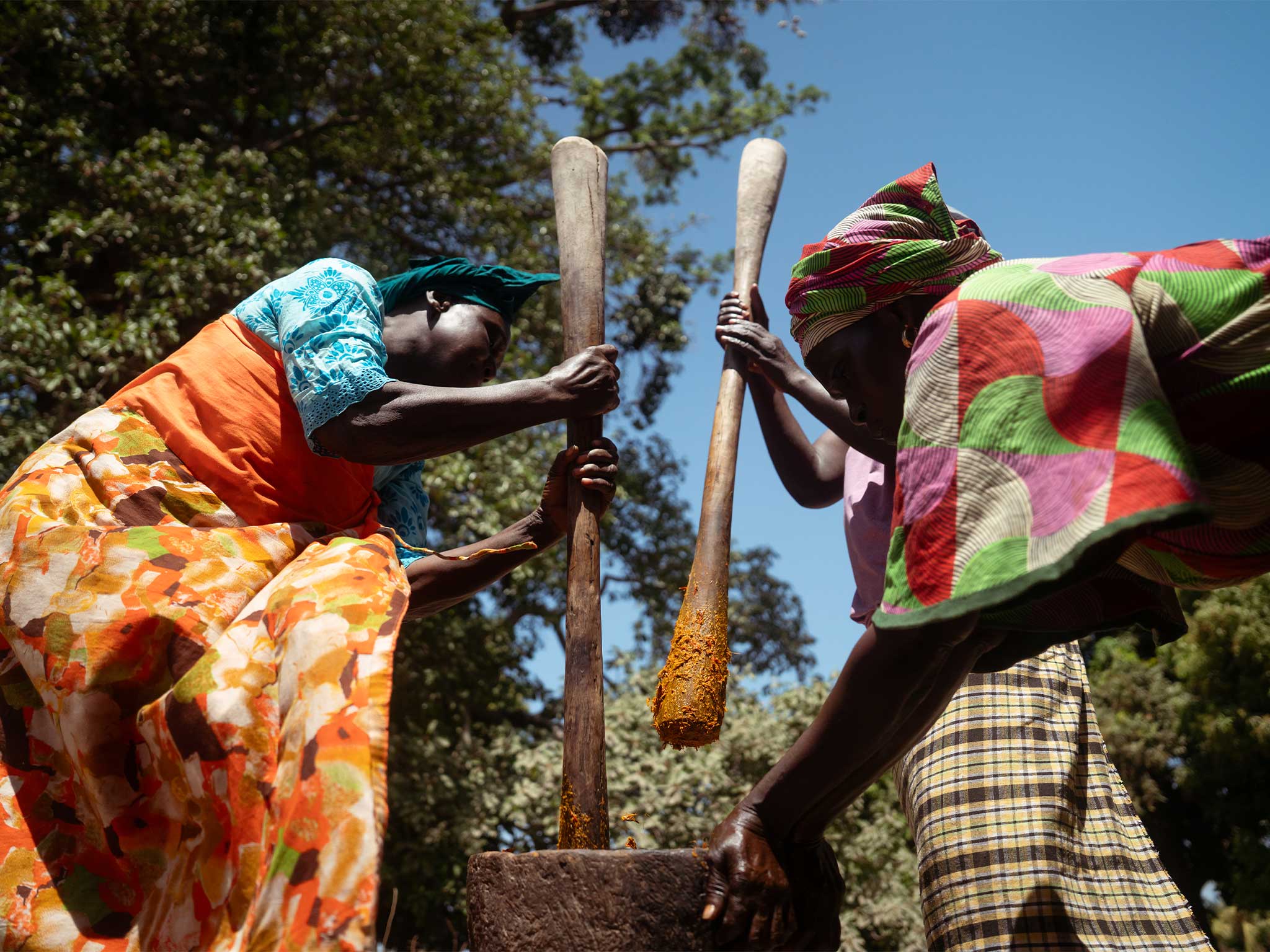

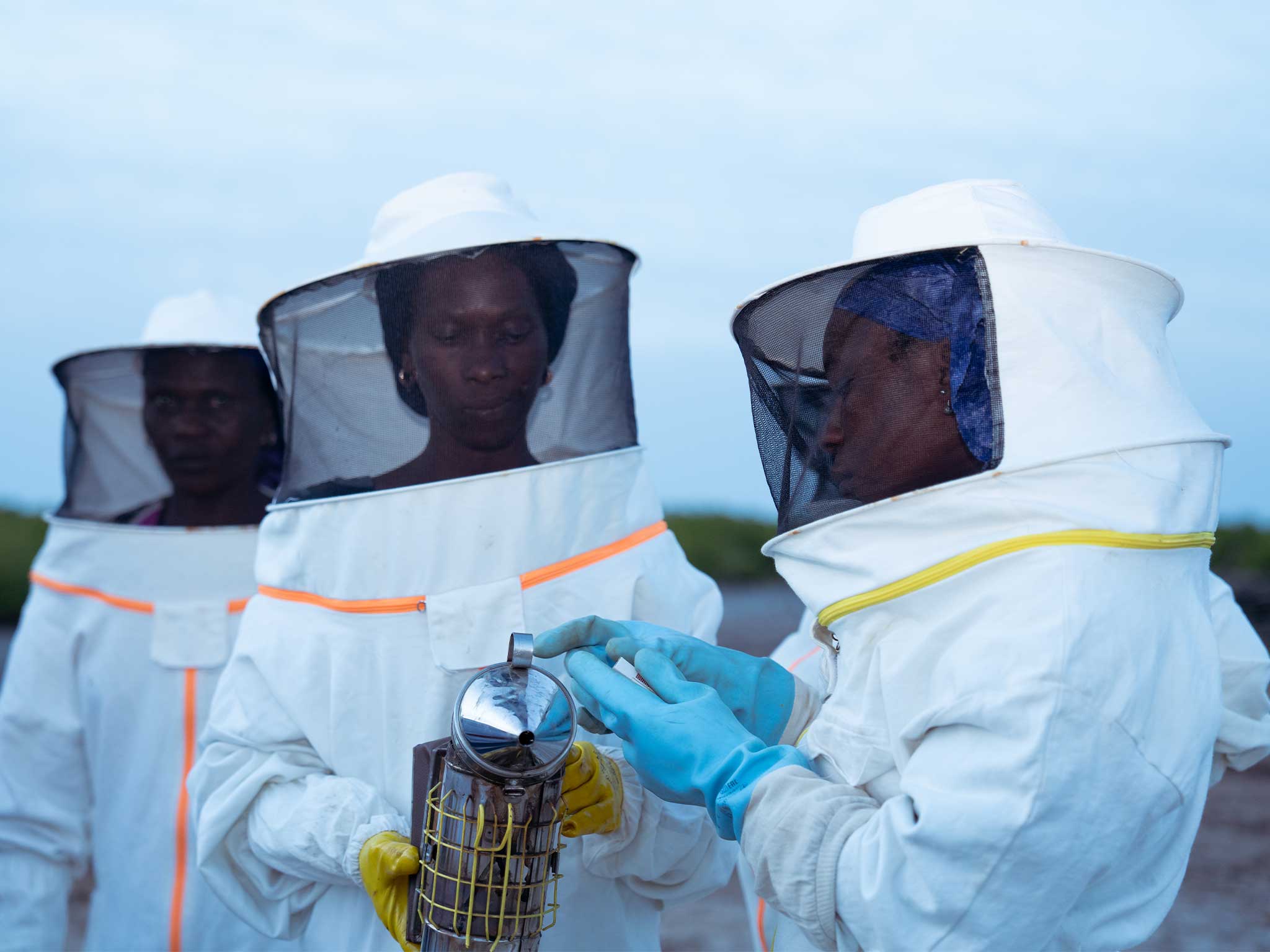
Women farmers from Guinea-Bissau learn how to harvest honey during a learning exchange in Senegal. At dusk, they use smoke to calm the bees before collecting the honey, gaining hands-on experience to assess whether beekeeping could be adapted in their own communities.
Photo: Cherif Khoury
Over four days in spring 2026, women farmers from Guinea-Bissau joined their peers in Senegal to learn from each other.
Though Rugui Baldé helped facilitate the learning exchange, she too learned a tonne.
“We took so many lessons from them and vice versa.”
Rugui is on the team at Tiniguena, an organization we helped to get its start in Guinea-Bissau in 1991. For Rugui, one priority was exploring whether beekeeping could become a new source of income for women Tiniguena works with.
At a time when climate change, shrinking international assistance and growing inequality are placing enormous pressure on communities—your gift today strengthens food sovereignty, advances women’s leadership and builds lasting, locally led solutions.
To this end, the Bissau-Guinean group met with women beekeepers in Senegal. Despite traditionally being considered “men’s work,” the women have become skilled honey producers with the support of Apisen, a local organization that provides beekeeping training, equipment and community outreach.
“We think beekeeping could work in our villages, with equipment and training,” says Rugui.
“We saw that their microclimate and the forests were very similar to our own communities.”
We took so many lessons from them and vice versa.
Rugui Baldé
Creating opportunities for our counterparts and the people they support to learn from one another is one way we help strengthen social justice movements. Cross-pollination is key; when people come together in common cause, they share what has worked in their own contexts, inspire one another and develop new ideas for action.
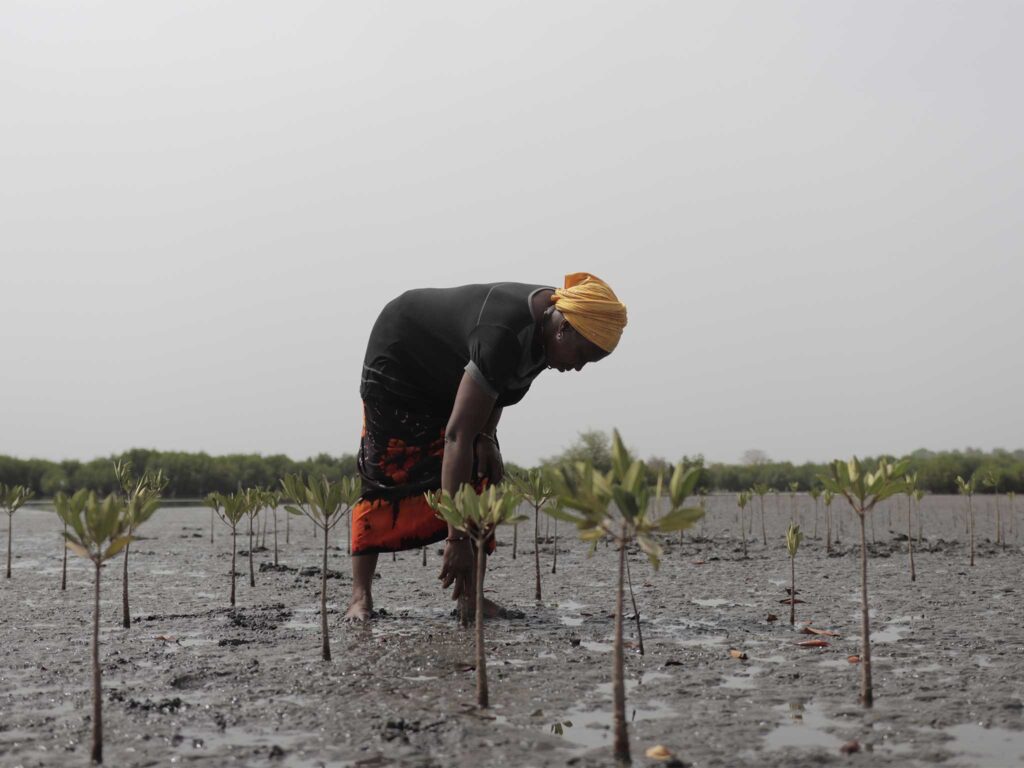
Enda Pronat, our Senegalese counterpart organization for more than two decades, also took part in the learning exchange. Rugui was interested in their simple system for monitoring mangrove regeneration.
The exchange continued a few weeks later when representatives from Senegal’s marine protected areas travelled to Guinea-Bissau. There, they learned how people in the remote Urok Islands manage their community marine protected area. The groups swapped stories about mangrove restoration, community governance and strategies to safeguard coastal ecosystems.
“Enda Pronat and Apisen took away some of the good lessons and good practices that we are using here in Guinea-Bissau,” says Rugui.
These conversations planted the seeds for relationships and ideas that will continue to grow long after the exchange, strengthening community-led efforts to protect ecosystems and build resilient livelihoods in Guinea-Bissau and Senegal.
Strengthen food sovereignty, advance women’s leadership and build lasting, locally led solutions.
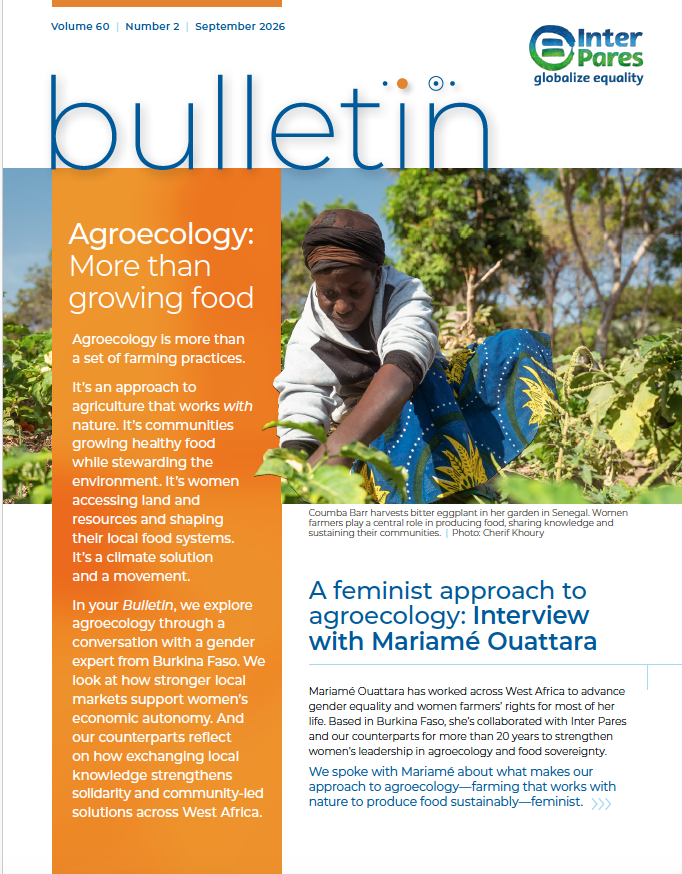
In your Bulletin, we explore how agroecology is more than a set of farming practices.
Inter Pares acknowledges Global Affairs Canada for its financial support for this project.